Why Choose Maxillofacial Plating Systems for Global Buyers?

Time:2026-10-13 Author:Ethan
0%

Why Choose Maxillofacial Plating Systems for Global Buyers?

Maxillofacial Plating Systems support the precise stabilization of facial fractures and reconstructive procedures. For global buyers, the decision involves more than price. It involves fit, strength, traceability, surgeon confidence, and dependable supply. A plate should follow the patient’s anatomy closely. Screw engagement should feel controlled, not forced. Instruments should remain practical under operating-room pressure. These details influence handling, fixation quality, and workflow efficiency.

Professor Rainer Schmelzeisen, a respected cranio-maxillofacial surgeon, has emphasized, “The objective of osteosynthesis is to restore function while respecting biological healing.” This principle remains highly relevant. Buyers should examine material specifications, plate profiles, screw compatibility, sterilization information, and quality documentation. They should also assess supplier training, technical support, and post-market responsiveness. Strong documentation reduces uncertainty across different healthcare environments. It does not eliminate it.

No system is perfect. Surgeons may prefer different contours, hole patterns, or instrument designs. A product that performs well in one setting may require adaptation elsewhere. That assumption needs review. Global procurement teams should compare clinical evidence with actual operating-room experience. They should invite surgeons, biomedical engineers, and quality specialists into the evaluation. Reliable purchasing decisions grow from that shared review. The best Maxillofacial Plating Systems are not simply manufactured components. They are carefully selected tools that support accurate treatment, responsible planning, and consistent patient care.
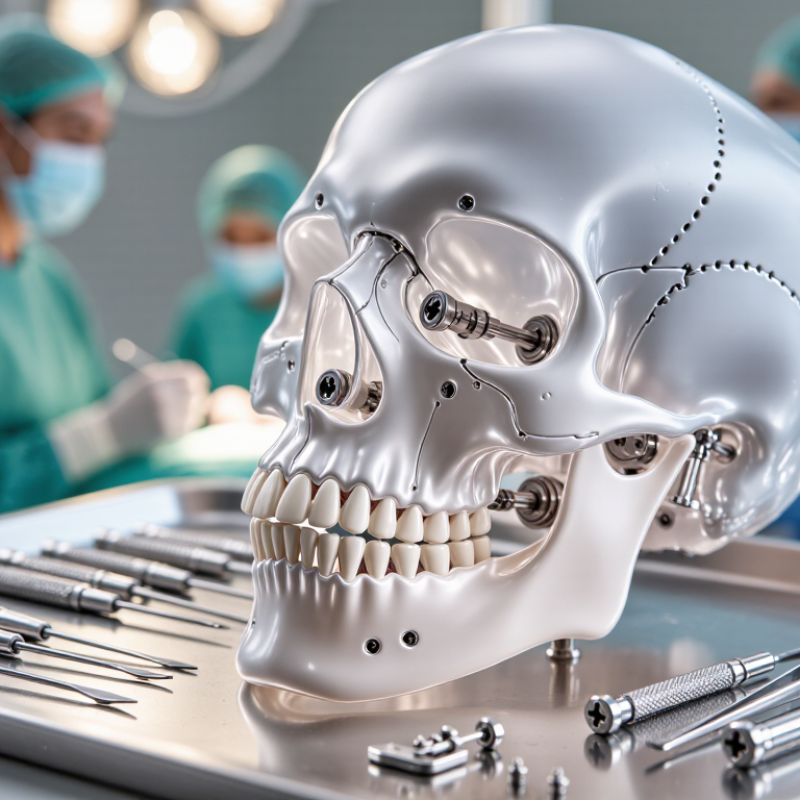
Why Choose Maxillofacial Plating Systems for Global Buyers?

What Are Maxillofacial Plating Systems?

What Are Maxillofacial Plating Systems?

Maxillofacial plating systems are medical fixation tools for facial bone repair and reconstruction. They stabilize fractured or repositioned bones while healing occurs. A typical system includes plates, screws, and specialized surgical instruments. Plates may be straight, curved, or mesh-like. Screws can use fixed-angle or variable-angle designs. Surgeons select each component according to bone thickness, fracture location, and surgical access. These systems support controlled stability.

They are not cosmetic accessories.

Common materials include titanium and resorbable polymers. Titanium offers strength, corrosion resistance, and broad clinical familiarity. Resorbable materials may reduce the need for later removal in selected cases. However, material choice is never automatic. Patient factors, healing conditions, and surgeon preference all matter. Buyers should review regulatory documentation, sterilization records, traceability, fatigue testing, and screw-plate compatibility. Product specifications alone are insufficient.

Global purchasing teams also need clear instructions for use and reliable quality control. Instrument availability matters during surgery. Training support matters too.

A smaller plate may reduce tissue irritation but provide less structural strength. No system is perfect. That trade-off deserves honest discussion. Experienced teams review imaging, bone quality, fracture patterns, and local requirements before approving a system. They should also confirm consistent manufacturing quality across international shipments.

How Do Maxillofacial Plating Systems Support Facial Bone Repair?

Maxillofacial plating systems convert surgical planning into stable, three-dimensional support for facial bones. Plates maintain fracture alignment while screws resist movement during healing. Their low-profile designs can reduce soft-tissue irritation around the cheek, orbit, and jaw. Fit still matters.

The World Health Organization’s Global Status Report on Road Safety 2023 reports approximately 1.19 million road-traffic deaths annually. Many high-energy crashes also create complex facial injuries, requiring precise reconstruction. The American College of Surgeons National Trauma Data Bank 2022 Annual Report included more than one million trauma records. This volume shows why global buyers need adaptable systems for varied fracture patterns and hospital resources.

In practice, surgeons assess occlusion, bone thickness, nerve pathways, and soft-tissue coverage before selecting fixation. A 2022 systematic review in the International Journal of Oral and Maxillofacial Surgery linked reliable repair to fracture stability, accurate reduction, and appropriate postoperative care. A thicker plate is not automatically safer. Excessive rigidity may interfere with contouring or irritate nearby tissue. Conversely, insufficient fixation can allow micromovement and delayed healing. Better systems offer multiple plate shapes, predictable screw engagement, and clear instrumentation. Their value is practical: less intraoperative adjustment, more consistent adaptation, and easier management across different facial zones. Yet outcomes still depend on surgeon judgment, imaging quality, sterilization, and follow-up. The hardware helps, but it cannot correct a poor reduction.

Which Materials and Components Are Commonly Used?

Maxillofacial plating systems commonly use commercially pure titanium or titanium alloy. These materials combine strength, corrosion resistance, and relatively low weight. Titanium plates can be shaped around the mandible, zygoma, or orbital rim during surgery. Their radiographic visibility helps clinicians review postoperative alignment. However, visibility can also create imaging artifacts near delicate anatomical structures. No material is perfect.

Common components include bone plates, self-tapping screws, orbital meshes, reconstruction bars, and temporary fixation accessories. Screw diameters and thread designs must match the selected plate system. This detail is easy to overlook during international purchasing. A mismatched instrument may delay a procedure or increase handling errors. Surgical trays should include compatible drivers, drills, guides, and depth gauges. Clear labeling matters.

Some systems use resorbable polymers, such as PLLA or related copolymers, when gradual support reduction is clinically appropriate. These materials may reduce the need for later removal, but their strength and degradation behavior require careful case selection. PEEK and other engineered polymers appear in selected patient-specific or implant-related applications, though they are not universal replacements for titanium. Global buyers should verify material certificates, sterilization validation, dimensional tolerances, traceability, and applicable regulatory documentation. Packaging should protect delicate plates from bending during transport. A lower purchase price is not automatically better. The practical question is whether every component performs consistently in the operating room.

Why Do Global Buyers Prioritize Quality and Compatibility?

Global buyers prioritize quality and compatibility because facial reconstruction allows little room for error. The World Health Organization’s Global Status Report on Road Safety 2023 records 1.19 million road deaths and 20–50 million non-fatal injuries annually. Many injuries involve complex facial structures. The Global Burden of Disease Study 2019 also estimated 4.3 million injury-related deaths worldwide. These figures show why reliable fixation systems matter.

Quality starts with consistent plate geometry, screw strength, material traceability, and documented manufacturing controls. Small details matter. A poorly finished edge can irritate soft tissue. Inconsistent threads may weaken screw engagement. Buyers should review testing aligned with recognized medical-device and biocompatibility standards, including ISO 13485 and ISO 10993. Supplier audits, batch records, and sterilization validation add practical confidence.

Compatibility is equally important. Plates must match available screws, drivers, drill guides, and surgical workflows. They should also suit different bone thicknesses, imaging needs, and anatomical contours. Fit is not guaranteed. A specification sheet may overlook instrument interchangeability or limited stock in regional hospitals. Procurement teams should request dimensional drawings, material certificates, fatigue data, and real-use feedback from surgeons. A thoughtful evaluation may reveal that the cheapest system creates extra inventory, training, or revision risks. That is an uncomfortable calculation, but global purchasing decisions should reflect the entire treatment pathway, not only the quoted unit price.

Why Choose Maxillofacial Plating Systems for Global Buyers? - Why Do Global Buyers Prioritize Quality and Compatibility?

Evaluation Dimension Common Technical Requirement or Benchmark Why Global Buyers Prioritize It Recommended Verification
Material Selection Implant-grade titanium and titanium alloys are widely used for maxillofacial fixation. ASTM F67 covers unalloyed titanium, while ASTM F136 covers titanium alloy for surgical implants. Material traceability, corrosion resistance, strength, and biocompatibility are essential for patient safety and regulatory acceptance. Review material certificates, lot traceability, mechanical-test records, and applicable biological evaluation documentation.
Biocompatibility Biological evaluation should be addressed under the ISO 10993 series according to the device type, body contact, and duration of contact. A documented biological-safety strategy helps buyers meet different national registration and hospital procurement requirements. Request a biological evaluation plan, relevant test reports, and a risk-management file.
Mechanical Performance ASTM F543 provides test methods for metallic bone screws, including insertion, removal, and torque-related performance assessments. Stable fixation reduces the risk of loosening, deformation, and loss of reduction during healing. Check test methods, acceptance criteria, fatigue data where applicable, and consistency across production lots.
Plate and Screw Compatibility Common maxillofacial screw-size families include approximately 1.2 mm, 1.5 mm, 2.0 mm, and 2.4 mm systems; exact dimensions and thread profiles are system-specific. Correct dimensional matching prevents cross-threading, poor locking, instrument mismatch, and intraoperative delays. Compare screw diameter, thread design, head geometry, hole dimensions, driver interface, and locking mechanism using controlled drawings.
Anatomical Coverage A complete system commonly includes plates for areas such as the mandible, midface, orbital region, and craniofacial contouring, with multiple lengths and hole configurations. Broader coverage allows hospitals and distributors to support more surgical indications while reducing inventory fragmentation. Evaluate anatomical range, plate profiles, hole spacing, contourability, and availability of emergency and revision components.
Low-Profile Design Low-profile plates are designed to reduce prominence in areas with limited soft-tissue coverage; thickness varies by anatomical location and mechanical requirement. A suitable profile can improve soft-tissue comfort and reduce the need for secondary procedures related to hardware prominence. Review thickness specifications, edge finishing, bending behavior, and clinical-use instructions for each anatomical indication.
Instrument Compatibility Drivers, drills, guides, bending tools, and cutting instruments must match the corresponding screw and plate geometry. Compatible instruments improve surgical workflow, reduce handling errors, and simplify training across multiple regions. Confirm driver size, connection type, drill diameter, guide dimensions, instrument durability, and reprocessing instructions.
Sterilization and Reprocessing Reusable instruments require validated cleaning, disinfection, packaging, and sterilization instructions; steam sterilization parameters must be validated for the specific device set. Clear reprocessing instructions support infection control and allow use in hospitals with different sterilization infrastructure. Check validated cycle parameters, maximum reuse information, inspection criteria, and compatibility with local hospital procedures.
Quality Management ISO 13485 is the internationally recognized quality-management standard specifically intended for medical-device organizations. A controlled quality system supports consistent manufacturing, corrective actions, supplier management, and regulatory submissions. Verify certification scope, audit status, change-control procedures, nonconformance records, and supplier qualification processes.
Imaging Considerations Titanium implants are generally compatible with radiographic and CT imaging, although metal can produce artifacts; MRI conditions must be evaluated for the specific implant configuration. Predictable imaging behavior supports postoperative assessment and helps clinicians manage diagnostic limitations. Review MRI safety information, imaging-artifact data, labeling, and any restrictions for mixed-material assemblies.
Documentation and Global Supply Essential documents generally include technical drawings, instructions for use, certificates, product identification, packaging specifications, and traceability records. Complete documentation reduces registration delays, supports distributor training, and improves recall or complaint management. Assess document language coverage, UDI or equivalent identification, shelf-life information, batch traceability, lead time, and replacement-part availability.

Reference framework: ISO 13485 for medical-device quality management, ISO 10993 for biological evaluation, ASTM F543 for metallic bone-screw testing, ASTM F67 for unalloyed titanium, and ASTM F136 for titanium alloy used in surgical implants. Exact specifications must be verified against the applicable device documentation and local regulatory requirements.

How Should Buyers Evaluate Suppliers and Regulatory Standards?

Why Choose Maxillofacial Plating Systems for Global Buyers?

Supplier evaluation should begin with clinical evidence, not attractive catalogs. The WHO Global Oral Health Status Report 2022 estimates that nearly 3.5 billion people live with oral diseases. This creates demand for dependable reconstruction systems, but demand alone cannot prove quality. Buyers should request fatigue-test results, dimensional tolerances, material certificates, and documented sterilization validation. Titanium grade, screw engagement, plate contouring, and instrument compatibility deserve close review. Small mismatches can delay surgery.

Regulatory evidence must match the destination market. Check ISO 13485 certification, ISO 14971 risk files, ISO 10993 biological evaluation, and current quality-system audit records. The ISO Survey 2023 recorded more than 30,000 ISO 13485 certificates worldwide. That number shows broad adoption, not automatic compliance. A certificate may cover one facility, one scope, or an outdated process. Buyers should verify registration status, unique device identification, complaint handling, and post-market surveillance. For the United States, confirm the applicable FDA pathway and current quality requirements. For Europe, review technical documentation, clinical evaluation, and conformity obligations under the Medical Device Regulation.

Tips: Ask for a traceability sample. Follow one plate from raw material to final release. Compare stated shelf life with real packaging data. Require answers in writing. I have seen supplier reviews rely too heavily on certificates. That approach is convenient, but incomplete. Independent testing and surgeon feedback can reveal practical weaknesses before purchasing.

Why Choose Maxillofacial Plating Systems for Global Buyers?

Supplier evaluation should combine regulatory readiness, clinical safety, manufacturing controls, and long-term product traceability. The chart presents a practical 100-point buyer due-diligence framework rather than a company ranking.

Key references commonly reviewed include ISO 13485 for quality management, ISO 14971 for medical-device risk management, ISO 10993 for biological evaluation, ASTM F543 for metallic bone-screw testing, and applicable market authorization requirements such as FDA 510(k), EU MDR, UK MDR, Health Canada licensing, or Australia’s ARTG pathway. Exact requirements depend on the device design, intended use, sterilization status, and destination market.

FAQS

How do maxillofacial plating systems support facial bone repair?

Plates maintain fracture alignment in three dimensions. Screws resist movement during healing. Low-profile designs may reduce irritation near the cheek, orbit, and jaw. Fit still matters.

What factors guide plate and screw selection?

Surgeons assess bite alignment, bone thickness, nerve pathways, and soft-tissue coverage. Fracture location also matters. A thicker plate is not automatically safer.

Which materials are commonly used?

Commercially pure titanium and titanium alloys are common choices. They offer strength, corrosion resistance, and relatively low weight. Titanium can be shaped around the jaw, cheekbone, or orbital rim.

Are resorbable materials suitable for every case?

No. Resorbable polymers may provide gradual support reduction in selected cases. Their strength and degradation behavior require careful evaluation. They are not universal replacements for titanium.

Which components should a complete system include?

Common components include plates, screws, orbital meshes, reconstruction bars, and temporary fixation accessories. Trays should also contain compatible drivers, drills, guides, and depth gauges. Missing tools can delay surgery.

Why is compatibility important for international purchasing?

Plates, screws, instruments, and guides must work together. Screw diameter and thread design should match the selected plates. A specification sheet may miss instrument interchangeability.

How can buyers evaluate system quality?

Buyers should review material certificates, dimensional tolerances, batch records, and sterilization validation. Testing should address device safety and biocompatibility. Clear labeling helps reduce handling errors.

Does a lower purchase price mean better value?

Not necessarily. A cheaper system may require extra inventory, training, or instrument replacement. Packaging should protect plates from bending during transport. The full treatment pathway matters more than unit price.

Can plating hardware guarantee successful healing?

No. Results also depend on imaging, reduction accuracy, sterilization, surgeon judgment, and follow-up care. Hardware supports the repair. It cannot correct a poor reduction.

What limitations should buyers remember?

Titanium may create imaging artifacts near delicate structures. Excessive rigidity can affect contouring or irritate nearby tissue. Insufficient fixation may allow micromovement. No material is perfect.

Conclusion

Maxillofacial Plating Systems are specialized medical devices used to stabilize and support fractured or surgically reconstructed facial bones. By holding bone segments in the correct position, these systems can promote healing, restore facial structure, and help surgeons manage complex procedures involving the jaw, cheekbone, orbit, and other areas. Common components include plates, screws, meshes, and fixation accessories, typically manufactured from biocompatible materials such as titanium or carefully selected polymers. Their design may vary according to anatomical location, surgical technique, and patient needs.

For global buyers, quality, compatibility, and dependable performance are essential. Products should offer accurate fit, appropriate strength, corrosion resistance, and compatibility with commonly used surgical instruments and imaging procedures. Buyers should also evaluate supplier experience, manufacturing consistency, traceability, technical support, and documentation. Compliance with applicable medical device regulations, quality management standards, sterilization requirements, and import rules in the target market is equally important. A thorough assessment helps healthcare providers select safe, reliable, and clinically suitable solutions for facial bone repair.

Ethan

Ethan

Ethan is a seasoned marketing professional with a deep expertise in our company's innovative product line. With a passion for sharing knowledge and insights, he takes the lead in regularly updating our corporate blog, where he explores industry trends, product features, and effective marketing......