2026 Top Titanium Cannulated Screws Suppliers?

Time:2026-09-08 Author:Sophia
0%

Selecting reliable Titanium Cannulated Screws suppliers in 2026 requires more than comparing catalogue prices. Hospitals, distributors, and orthopedic manufacturers need evidence of material quality, machining accuracy, sterilization controls, and traceable production. A dependable supplier should provide certificates, inspection records, and clear information about titanium grade, thread design, cannulation diameter, and surface finish. Small details matter.

Clinical experience also shapes a responsible evaluation. Surgeons may value smooth guidewire passage, consistent screw geometry, and predictable insertion during complex fixation procedures. Engineers often examine fatigue performance, dimensional tolerances, packaging integrity, and compatibility with existing instruments. These practical requirements can expose weaknesses that a polished website does not reveal.

This guide reviews leading Titanium Cannulated Screws suppliers expected to attract attention in 2026. It considers manufacturing capability, regulatory transparency, product customization, export experience, technical support, and customer feedback. Supplier rankings should not be treated as final medical advice. Conditions vary by market, procedure, and hospital protocol. Verify every claim.

Some suppliers may appear strong but disclose limited testing data. Others may offer excellent engineering yet lack responsive after-sales service. That matters. A lower quote can become expensive when deliveries slip or documentation is incomplete. The most credible partners explain their limitations, welcome independent verification, and maintain consistent quality across production batches. Readers should compare current certificates, sample products, audit results, and contract terms before making a purchasing decision. The market changes quickly, and this review may require revision as new manufacturers, standards, and technologies emerge.
2026 Top Titanium Cannulated Screws Suppliers?

Titanium Cannulated Screws: Definition, Design, and Clinical Applications

Titanium Cannulated Screws: Definition, Design, and Clinical Applications

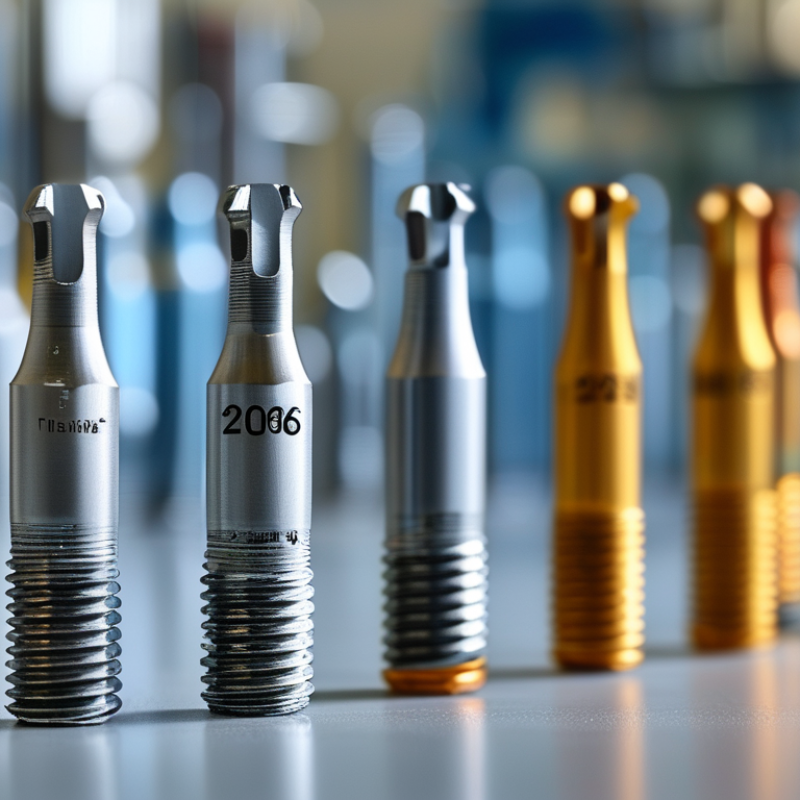
A titanium cannulated screw is a hollow fixation device placed over a guidewire. This channel supports accurate insertion through a smaller surgical opening. Its titanium alloy body offers strength, corrosion resistance, and useful biocompatibility. Radiographs can still show the implant clearly. However, imaging artifacts may affect detailed assessment.

The design usually includes a threaded shaft, a head, and a central passage. Thread geometry influences purchase in cortical or cancellous bone. A partially threaded model can create compression across a fracture. Fully threaded versions may provide positional fixation without compression. The guidewire must remain stable. Small deviations can change screw placement.

Clinicians use these screws for selected fractures, osteotomies, and reconstructive procedures. Common sites include the foot, ankle, wrist, and hip. Clinical decisions depend on bone quality, fracture pattern, patient age, and load demands. Cannulation can reduce soft-tissue disruption, but it does not remove surgical risk. The screw may also fail if the trajectory, length, or fixation strategy is poorly selected. Fit matters. Supplier evaluation should include material certificates, dimensional inspection, sterilization records, and traceability. The design is not perfect. Careful planning still matters more than a hollow center.

Key Factors for Evaluating Titanium Cannulated Screw Suppliers

Key Factors for Evaluating Titanium Cannulated Screw Suppliers

The orthopedic implants market was valued at approximately USD 52.12 billion in 2024, according to Fortune Business Insights’ 2024 market report. Growth increases supplier choice, but market size does not prove manufacturing quality. Buyers should verify titanium grade, chemical certificates, and lot-level traceability. ASTM F136 titanium alloy is commonly specified for implant applications. Each supplier should explain how raw material identity remains protected through machining, cleaning, and packaging.

Engineering evidence deserves close attention. Request fatigue testing, dimensional inspection records, and cannulation tolerances for every screw family. A small internal diameter variation can affect guidewire passage during surgery. ISO 13485 certification supports controlled processes, yet certification alone cannot replace product-specific evidence. Ask for nonconformance rates, corrective-action history, and sterilization validation. The U.S. FDA’s Quality Management System Regulation, effective in 2026, aligns more closely with ISO 13485 requirements, making documented quality systems increasingly important.

Traceability matters. Suppliers should provide batch records, inspection methods, and change-notification procedures. Review lead times for standard and custom sizes, not only quoted prices. A low price may hide weaker inspection or unstable capacity. That gap matters. I would also examine clinical literature and post-market data, although these records can be incomplete. Suppliers should acknowledge limitations instead of presenting perfect claims. Test the details. A practical evaluation combines material evidence, production experience, regulatory readiness, and responsive technical support.

Top Titanium Cannulated Screws Suppliers in 2026

In 2026, leading titanium cannulated screws suppliers will be judged by evidence, not catalog size. Grand View Research estimated the global orthopedic implants market at USD 57.1 billion in 2023, with continued growth through 2030. This expansion increases supplier competition, but it also raises verification demands.

Look beyond polished websites. A reliable supplier should show ISO 13485 certification, controlled machining records, and traceability from titanium bar to sterilized package. Titanium alloy should match recognized specifications, such as ASTM F136, while biocompatibility evidence should align with ISO 10993. Cannulation accuracy matters. A guidewire should pass smoothly through a screw without rough edges or visible burrs. That small test can reveal weak process control.

Ask for dimensional inspection reports, fatigue-testing results, coating details, and batch-level certificates. Suppliers with validated cleaning and packaging processes deserve stronger consideration. The 2024 MarketsandMarkets analysis of the orthopedic devices sector also points to sustained demand for minimally invasive procedures, supporting interest in cannulated fixation systems. Still, market reports rarely identify the best supplier for every hospital or distributor. That is a limitation worth acknowledging.

Lead times should be measured against real production records, not promises. Request samples from multiple lots. Review complaints, recall history, and corrective-action procedures where legally available. Price remains relevant, but the cheapest screw may create hidden costs through delays or inconsistent fit. Supplier selection is never perfectly objective. Clinical needs, surgeon preference, and regional regulatory requirements can change the ranking.

Quality Standards, Certifications, and Manufacturing Capabilities

When evaluating 2026 titanium cannulated screw suppliers, quality evidence matters more than catalog variety. Look for implant-grade titanium supported by material certificates, such as ASTM F136 or ISO 5832-3 for Ti-6Al-4V ELI. Chemical composition, tensile strength, and heat-treatment records should match each production lot. Small details matter. A clean thread is not enough.

A capable manufacturer should operate under ISO 13485 and maintain risk controls aligned with ISO 14971. Biocompatibility evidence may follow relevant ISO 10993 tests. Regulatory files should identify whether products are sterile, non-sterile, or supplied as components. Packaging claims also need verification, especially when ISO 11607 applies. If sterilization is performed, request validated cycle records and routine monitoring data. Certificates alone can mislead.

Manufacturing capability deserves direct inspection. CNC machining should control thread profile, cannulation diameter, tip geometry, and surface defects. Suppliers should use calibrated gauges, optical measurement, and documented sampling plans. Lot traceability must connect raw titanium, operators, machines, inspections, and final release. Ask for nonconformance reports, not only perfect sample reports. That conversation may feel uncomfortable. It is useful.

Experienced suppliers can provide custom lengths, diameters, and driver interfaces without losing process control. They should explain tolerance limits clearly and manage design changes through formal approval. Some facilities advertise advanced equipment but outsource critical operations. Verify this point. A practical audit may reveal uneven documentation, delayed corrective actions, or inconsistent cleaning records. Those weaknesses require careful review before technical approval.

2026 Top Titanium Cannulated Screws Suppliers? — Quality Standards, Certifications, and Manufacturing Capabilities
Evaluation Dimension Verified Industry Benchmark Recommended Evidence from a Supplier Why It Matters for Cannulated Screws Assessment Status
Quality Management System ISO 13485:2016 certification covering the applicable medical-device manufacturing scope Current certificate, certification body, scope statement, and successful surveillance-audit history Demonstrates controlled procedures for design, purchasing, production, traceability, corrective action, and release Required
Risk Management ISO 14971:2019-based risk-management process Risk-management plan, hazard analysis, design-risk controls, and residual-risk evaluation Addresses risks such as breakage, migration, loss of cannulation, incorrect insertion, and material-related reactions Required
Titanium Material Commercially pure titanium conforming to ASTM F67 or titanium alloy conforming to ASTM F136, as specified by the device design Material certificates, heat or lot traceability, chemical composition, mechanical-property results, and supplier declarations Confirms that the implant material meets recognized requirements for chemical composition and mechanical performance Required
Screw Performance Testing Testing aligned with ASTM F543 for metallic medical bone screws Axial pullout, insertion torque, driving torque, torsional strength, and fatigue-test reports using defined methods Helps verify resistance to insertion damage, stripping, torsional failure, and cyclic loading in clinical use Required
Cannulation Quality Controlled cannulation diameter, concentricity, straightness, and internal-surface condition according to approved drawings Inspection records, calibrated gauges, coordinate-measuring results, in-process checks, and sampling plans Maintains guidewire compatibility and reduces the risk of blockage, eccentric drilling, or compromised screw strength Critical
Thread and Head Geometry Dimensional conformity to approved engineering drawings, including pitch, major diameter, core diameter, thread length, and drive interface First-article inspection report, dimensional-control plan, thread gauges, and inspection equipment calibration records Supports secure bone purchase, predictable insertion, instrument compatibility, and consistent compression performance Critical
Surface Finish Controlled machining, deburring, cleaning, and surface-treatment processes with acceptance limits defined in the product specification Surface-inspection criteria, roughness measurements where applicable, burr-control records, and cleaning-validation reports Reduces particulate contamination, tissue irritation, insertion friction, and stress-concentration sites Critical
Biocompatibility Biological evaluation planned and documented in accordance with ISO 10993 for the finished, patient-contacting device Biological-evaluation plan, test reports or toxicological assessment, material-contact classification, and sterilization-impact review Confirms that the finished screw and its processing residues are suitable for the intended body contact and duration Required
Sterilization Capability Validated sterilization process when supplied sterile, or validated cleaning and packaging controls when supplied non-sterile Validation summary, routine monitoring records, packaging validation, and sterile-barrier integrity results where applicable Protects product sterility, shelf life, and packaging integrity through distribution and storage Application-Specific
Cleanroom and Environmental Control Documented environmental controls appropriate to machining, cleaning, assembly, and packaging activities Cleanroom classification records where applicable, environmental-monitoring data, gowning procedures, and contamination-control plans Limits particulate, microbial, and process contamination on implantable products Required
Manufacturing Equipment Validated or qualified CNC machining, thread forming or cutting, cannulation, deburring, cleaning, inspection, and packaging equipment Equipment qualification files, preventive-maintenance records, process-capability studies, and calibration certificates Improves repeatability across screw sizes, thread profiles, cannulation dimensions, and production lots Required
Process Validation Validation of processes whose results cannot be fully verified by subsequent inspection Process-validation protocols, installation and operational qualification, performance qualification, and revalidation criteria Provides confidence in cleaning, passivation or surface treatment, packaging, and other critical processes Required
Traceability Lot-level traceability from raw titanium material through machining, inspection, packaging, and final release Device-history records, lot codes, material heat numbers, traveler documents, and retention policy Enables targeted investigation, recall control, complaint handling, and regulatory reporting Required
Regulatory Support Technical documentation structured for the target market, including design verification, manufacturing controls, labeling, and post-market processes Sample technical-file index, declaration documents where applicable, change-control procedure, and complaint-handling process Reduces regulatory delays and supports market-specific submissions without relying solely on manufacturing claims Required
United States Market Readiness Quality-system and device documentation aligned with applicable United States medical-device requirements, including the FDA Quality Management System Regulation effective February 2, 2026 Registration or listing information where applicable, submission support records, complaint procedures, and inspection-readiness documentation Helps purchasers evaluate whether the supplier can support compliant distribution and regulatory oversight in the United States Market-Specific
European Market Readiness Documentation aligned with Regulation (EU) 2017/745 when the device is intended for the European Union market Applicable conformity documentation, clinical-evaluation support, post-market surveillance procedures, and authorized-representative arrangements where required Supports conformity assessment, technical documentation, and ongoing post-market obligations Market-Specific
Supplier Qualification Documented control of titanium, packaging, cleaning-chemical, and outsourced-process suppliers Approved-supplier list, supplier audits, incoming-inspection records, quality agreements, and change-notification requirements Controls variability and prevents unapproved changes to materials or critical manufacturing steps Required
Production Capacity Capacity demonstrated through validated process flow, available machine time, inspection resources, and contingency planning Capacity statement, representative production records, lead-time history, backup-equipment plan, and continuity procedures Indicates whether the supplier can support sustained demand without sacrificing quality or delivery performance Verify by Audit
Customization Capability Controlled capability for custom diameters, lengths, thread profiles, drive interfaces, cannulation sizes, and packaging configurations Design-transfer procedure, engineering-change workflow, prototype-to-production records, and sample inspection reports Supports procedure-specific requirements while preserving validated manufacturing and regulatory controls Verify by Audit
Quality Release Final release based on documented acceptance criteria for dimensions, material, surface condition, packaging, and labeling Certificate of conformity, final-inspection report, nonconformance records, release authorization, and batch documentation Ensures that only conforming cannulated screws enter the supply chain Required

How to Select the Right Supplier for Your Surgical Requirements

Selecting a titanium cannulated screw supplier starts with your surgical requirements, not a polished catalog. Define screw diameter, length range, thread profile, head design, and cannulation size. Consider the target anatomy and the instruments used during insertion. A mismatch can slow surgery or compromise handling.

Ask each supplier for material certificates, dimensional inspection records, lot traceability, and documented quality procedures. A supplier operating under a recognized medical-device quality system deserves closer consideration. Request samples for tactile evaluation. Check thread sharpness, guidewire passage, driver fit, and surface finish. Confirm whether products are sterile or non-sterile, then review packaging and shelf-life data. Delivery capacity also matters. A reliable supplier should explain production lead times, minimum order quantities, change controls, and complaint handling. Price alone is weak evidence. A low quote may exclude testing, compatible instruments, or technical support.

Tips: Build a simple comparison sheet. Record every answer. Ask for recent inspection examples, not promises. Verify that specifications remain consistent across production lots. Speak with the technical team, not only sales staff. Leave room for doubt; even a strong evaluation can miss a small tolerance issue. Recheck critical dimensions before approval.

FAQS

: What evidence should a titanium cannulated screw supplier provide?

: Request material certificates, inspection reports, fatigue results, coating details, and batch-level traceability. A polished catalog is not enough.

Which titanium specifications are commonly relevant?

Implant-grade titanium may follow ASTM F136 or ISO 5832-3 specifications. Check chemical composition, tensile strength, and heat-treatment records for each lot.

How can cannulation quality be checked?

Pass a guidewire through the screw. It should move smoothly without catching, rough edges, or visible burrs. This simple test can expose weak machining control.

What manufacturing controls deserve attention?

Review CNC controls for thread profile, cannulation diameter, tip geometry, and surface defects. Ask about calibrated gauges, optical measurements, and sampling plans.

Why does lot traceability matter?

Traceability should connect titanium bars, operators, machines, inspections, and final packaging. It helps identify problems quickly. Good records matter.

What certifications and quality systems should be reviewed?

Check medical-device quality certification, risk-management procedures, biocompatibility evidence, and validated cleaning processes. Certificates alone can still hide gaps.

How should samples be evaluated before approval?

Examine thread sharpness, surface finish, guidewire passage, driver fit, and critical dimensions. Request samples from multiple production lots, not one attractive sample.

What delivery details should a supplier explain?

Ask for production lead times, minimum order quantities, packaging status, shelf life, and change-control procedures. Measure promises against recent production records. Promises are not proof.

Is the lowest price usually the best choice?

Not necessarily. A low quote may exclude testing, compatible instruments, or technical support. Inconsistent fit and delays can create larger costs later.

Can supplier evaluation be completely objective?

No. Surgical preferences, clinical requirements, and regional regulations can change the result. Even a strong audit may miss a small tolerance issue. Recheck critical dimensions.

Conclusion

This article presents a practical guide to Titanium Cannulated Screws, explaining their hollow, guidewire-compatible design, material advantages, and common clinical applications in orthopedic trauma and reconstructive surgery. It outlines how cannulation can support accurate placement while titanium offers a balance of strength, corrosion resistance, and biocompatibility. The discussion also identifies essential criteria for evaluating suppliers, including product consistency, dimensional accuracy, surface finish, packaging, customization options, production capacity, technical support, and delivery reliability.

The 2026 supplier overview focuses on manufacturers with strong quality systems, traceable processes, and capabilities for producing screws in different sizes, thread designs, and configurations. It also emphasizes the importance of certifications, validated manufacturing procedures, sterilization compatibility, inspection controls, and compliance with applicable medical-device requirements. Finally, the article provides a selection framework to help hospitals, distributors, and surgical-device companies compare suppliers according to clinical needs, regulatory expectations, budget, order volume, and long-term cooperation potential.

Sophia

Sophia

Sophia is a dedicated marketing professional with an exceptional depth of knowledge about her company's products and services. With a keen understanding of market trends and customer needs, she crafts insightful blog posts that not only inform but also engage readers, enriching the company’s online......