Choosing the top Self Tapping Bone Screws manufacturers worldwide requires more than comparing catalog prices or polished websites. These implants must provide dependable thread formation, controlled insertion torque, and consistent biocompatibility. Grand View Research’s Orthopedic Devices Market Size, Share & Trends Analysis Report identifies trauma fixation as a major demand area, supported by aging populations, sports injuries, and expanding surgical capacity. Fortune Business Insights reports similar growth across the orthopedic implants sector. However, these reports usually combine multiple product categories. Their figures should not be treated as precise sales data for bone screws alone.
A credible manufacturer should demonstrate ISO 13485 certification, validated sterilization processes, traceable titanium or stainless-steel materials, and documented quality-control testing. FDA 510(k) databases and European Medical Device Regulation requirements can help verify regulatory pathways, although approval status differs by model and market. Look for evidence such as batch records, mechanical test results, coating specifications, and surgeon feedback from real clinical settings. Small details matter: clean thread peaks, stable driver engagement, and packaging that remains sealed after transport.
Experience still matters.
This guide will compare established manufacturers by product reliability, engineering capability, regulatory transparency, customization support, and global distribution. It will also consider weaknesses, because no supplier is perfect. Some companies publish impressive certificates but provide limited clinical evidence. Others offer strong pricing but weaker after-sales support. Readers should confirm current registrations, intended use, and regional availability before making a purchasing decision. Market rankings change, and a careful review remains necessary.
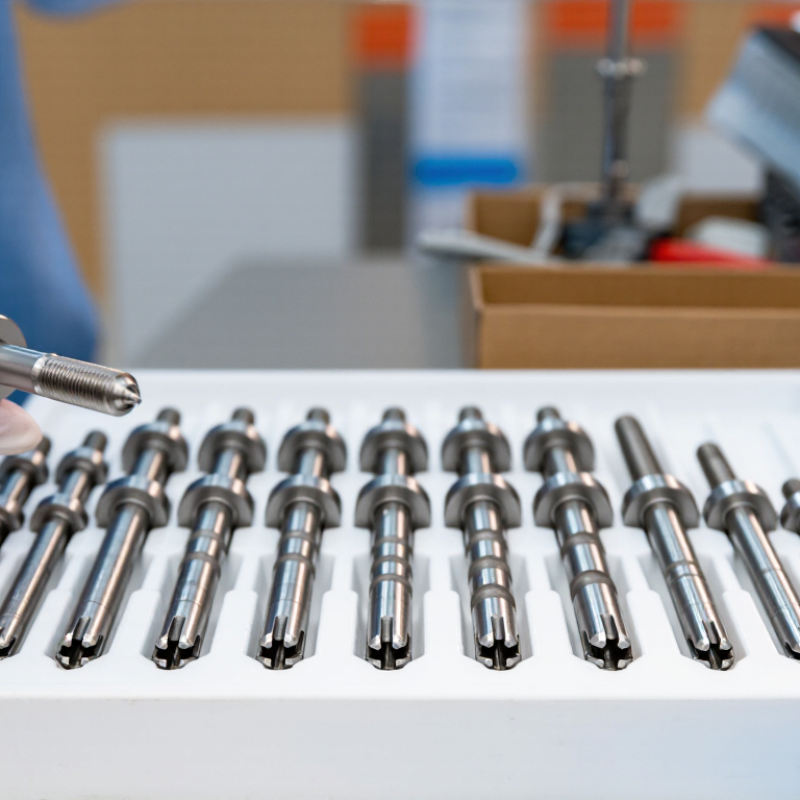
Self-tapping bone screws are fixation devices designed to cut their own threads during insertion. A cutting flute at the tip removes small bone chips. The threads then engage the surrounding cortical or cancellous bone. Surgeons usually create a pilot hole before insertion. This guides the screw and limits resistance. It is not optional in every case.
During controlled rotation, the cutting edge forms a matching thread inside the pilot hole. The screw advances while its threads compress nearby bone. Dense cortical bone may require higher insertion torque and careful speed control. Softer cancellous bone needs gentler handling. Excessive force can damage threads or cause heat. Too little force may produce weak fixation. The screw’s diameter, pitch, length, and tip design all affect performance.
A practical distinction matters here. Not every self-tapping screw is self-drilling. Some still require a prepared hole with a selected diameter. Proper choice depends on bone quality, fracture pattern, surgical technique, and imaging findings. Manufacturers should verify dimensions, material quality, fatigue strength, and biocompatibility through controlled testing. Sterile packaging and traceable production records also support reliability.
The phrase “self-tapping” can sound effortless. It is not. Clinical judgment remains essential. Even experienced teams may reassess torque, trajectory, and screw purchase during surgery. That small pause can prevent a poorly seated implant.
High-quality self-tapping bone screws begin with carefully selected materials. Titanium alloy, especially Ti-6Al-4V ELI, offers high strength, low weight, and good tissue compatibility. It also creates fewer imaging artifacts than many steel alternatives. Surgical-grade stainless steel remains useful where higher stiffness and strong torque resistance are required. Bioresorbable polymers can support selected procedures, but their strength and degradation behavior need closer evaluation.
Design matters just as much. A sharp cutting flute should create threads efficiently without excessive heat or debris. The tip must cut predictably. Thread depth, pitch, and core diameter should match the target bone and expected load. A stronger core can resist bending, while a finer thread may improve purchase in dense cortical bone. In softer bone, deeper threads may provide better holding power.
Small details matter.
The drive recess should transfer torque without stripping. The head-to-shaft transition should reduce stress concentration. Surface finishing also affects insertion force, corrosion resistance, and cleaning reliability. Qualified manufacturers verify dimensions, fatigue performance, material composition, and sterilization compatibility through documented testing. Still, no design fits every patient or surgical site. I would question any product promising effortless insertion in all bone types. Real procedures involve variable density, limited visibility, and imperfect angles. A screw that performs well in a laboratory may behave differently in living bone. That gap deserves honest review.
| Evaluation Dimension | Material or Design Type | Typical High-Quality Specification | Primary Functional Benefit | Quality and Verification Considerations |
|---|---|---|---|---|
| Implant Material | Commercially pure titanium | Grades 1–4, selected according to the required balance of strength, ductility, and formability | Excellent corrosion resistance, biocompatibility, and relatively low elastic modulus | Material grade, chemical composition, mechanical properties, and implant-processing records should be traceable |
| Implant Material | Titanium alloy Ti-6Al-4V ELI | Medical-grade titanium alloy commonly specified to ASTM F136 or an equivalent material standard | High strength-to-weight ratio and good fatigue performance for orthopedic fixation | Verify alloy chemistry, heat treatment, surface condition, and compliance with the applicable implant-material standard |
| Implant Material | Implant-grade stainless steel | Commonly specified to ASTM F138 or an equivalent standard for wrought austenitic stainless steel | High strength, established clinical use, and cost-effective manufacturing | Corrosion resistance, passivation, nickel content, surface cleanliness, and fatigue performance are important checks |
| Implant Material | Cobalt-chromium-molybdenum alloy | Used selectively where high strength, wear resistance, and stiffness are required | High mechanical strength and strong resistance to corrosion and wear | Material selection should account for stiffness mismatch and the specific anatomical fixation application |
| Thread Design | Self-tapping flute | Cutting flute or notched tip designed to form the thread during insertion after the pilot hole is prepared | Can reduce the need for separate thread tapping and shorten the surgical workflow | Flute geometry must provide reliable cutting without excessive insertion torque, bone debris, or tip breakage |
| Thread Design | Self-drilling and self-tapping tip | Sharp drilling point combined with a cutting flute; used only when supported by the intended bone and surgical technique | May reduce instrumentation steps in selected applications | Tip sharpness, axial alignment, torque resistance, and compatibility with cortical bone should be validated |
| Thread Design | Cortical screw thread | Fine-pitch thread with relatively shallow depth for dense cortical bone | Provides reliable purchase in hard cortical bone while limiting excessive thread prominence | Thread profile, pitch, core diameter, and insertion torque should be matched to the intended anatomical site |
| Thread Design | Cancellous screw thread | Coarser and deeper thread profile designed for softer cancellous bone | Improves thread engagement and resistance to pull-out in low-density bone | Thread depth and pitch must be balanced against bone quality to avoid excessive bone damage or stripping |
| Thread Design | Variable-pitch or differential-pitch thread | Thread pitch changes along the screw length to support controlled compression or improved purchase | Can assist interfragmentary compression or enhance fixation in selected procedures | Compression behavior, insertion torque, and compatibility with the surgical technique require bench testing |
| Fixation Design | Locking screw interface | Threaded screw head designed to engage with a threaded plate hole or compatible fixation system | Creates a fixed-angle construct and can reduce dependence on plate-to-bone compression | Head-to-plate compatibility, angular stability, torque limits, and resistance to stripping are critical |
| Fixation Design | Conventional non-locking screw | Underside of the head designed to compress the plate against bone when appropriately inserted | Provides direct plate-to-bone compression and flexible fixation options | Head geometry, countersink profile, torque control, and risk of over-compression should be assessed |
| Screw Geometry | Cannulated screw | Central hollow channel for placement over a guidewire | Supports accurate trajectory control and minimally invasive placement | The cannulation reduces the core cross-section; fatigue strength and guidewire compatibility must be verified |
| Screw Geometry | Partially threaded screw | Threads occupy only part of the shaft, leaving a smooth section beneath the head | Can provide interfragmentary compression when the threaded portion engages the far fragment | Thread length must correspond to fracture geometry and the selected compression technique |
| Screw Geometry | Fully threaded screw | Threads extend along most or all of the intended bone-engagement length | Provides consistent purchase and is suitable for many neutral or locking fixation applications | Thread engagement, core diameter, fatigue resistance, and insertion depth should be evaluated |
| Surface Finish | Machined and passivated surface | Controlled surface roughness with removal of free iron and manufacturing contaminants | Improves corrosion resistance and supports consistent insertion behavior | Inspect for burrs, sharp unintended edges, particulate contamination, and passivation effectiveness |
| Surface Treatment | Roughened or porous surface | Controlled surface texture used when bone ongrowth or improved interface characteristics are intended | May support biological fixation in selected implant designs | Surface chemistry, roughness, coating adhesion, particle release, and cleaning validation must be controlled |
| Mechanical Performance | Insertion torque and stripping resistance | Torque profile appropriate for the screw diameter, material, thread design, and target bone density | Helps prevent inadequate fixation, thread stripping, and intraoperative screw damage | Testing should include insertion torque, removal torque, torsional strength, and construct-specific limits |
| Mechanical Performance | Fatigue strength | Resistance to cyclic loading under conditions representative of the intended anatomical application | Reduces the risk of fatigue fracture during healing and repeated physiological loading | Evaluate according to the relevant implant and screw-testing standards, including ASTM F543 where applicable |
| Biological Safety | Biocompatibility and cleanliness | Materials and manufacturing processes evaluated under a biological-safety framework such as ISO 10993 | Reduces risks associated with cytotoxicity, sensitization, irritation, and contamination | Cleaning validation, sterilization compatibility, packaging integrity, and biological evaluation should be documented |
| Regulatory Quality | Design and process controls | Documented risk management, design verification, validation, traceability, and controlled manufacturing processes | Supports consistent product performance and regulatory conformity across production batches | Relevant references may include ISO 13485, ISO 14971, ISO 5835, ISO 6475, and ASTM F543, depending on product type |
Leading self-tapping bone screw manufacturers are evaluated through evidence, not polished catalogues. A 2024 Grand View Research report projects the global orthopedic implants market to grow at about 4.7% annually through 2030. That expansion increases supplier choice, but it also raises quality risks.
Material traceability matters. Auditors should verify titanium or stainless-steel grades, heat-treatment records, and corrosion testing. Thread geometry deserves close attention. A reliable screw should cut efficiently, resist stripping, and maintain predictable insertion torque. ISO 13485 certification supports consistent processes, but certification alone is insufficient. Reviewers should examine nonconformity records, corrective actions, complaint trends, and sterilization controls. Small details matter.
Clinical evidence separates mature manufacturers from capable imitators. Independent testing should assess pull-out strength, fatigue performance, insertion torque, and driver compatibility. The FDA’s 2023 medical device reporting data also shows why post-market surveillance matters; adverse-event signals can reveal problems that laboratory tests miss. Yet reporting systems have limitations. Underreporting remains possible.
Worldwide evaluation should include delivery reliability, batch-level documentation, engineering support, and transparent regulatory submissions. The World Health Organization’s Global Patient Safety Action Plan emphasizes learning from incidents and improving traceability. Manufacturers should therefore provide clear lot numbers and investigation timelines. A low price may look attractive. It can conceal weaker validation or inconsistent supply. Even experienced buyers can overvalue production scale. Real confidence comes from repeatable results, accessible records, and honest responses when something fails.
Major self-tapping bone screw manufacturers usually include specialized orthopedic implant companies, precision medical device producers, and experienced contract manufacturers. These firms develop screws for trauma, spinal, dental, and reconstructive procedures. Their product teams often combine orthopedic surgeons, biomechanical engineers, machinists, and regulatory specialists.
A reliable manufacturer should show evidence of controlled production and consistent quality. Look for documented quality systems, validated machining processes, and traceable materials such as titanium alloys or surgical stainless steel.
Thread geometry deserves close attention. A sharp cutting flute can reduce insertion torque, while a poorly finished tip may damage bone or increase heat. Small details matter.
Manufacturers also differ in coating options, sterilization support, packaging, and customization. Some produce standard screw ranges. Others make patient-specific or procedure-specific designs. Technical files, inspection reports, and fatigue-testing data can help buyers compare suppliers fairly. However, certifications alone do not prove excellent clinical performance. That assumption needs caution.
From practical evaluation, communication is equally important. A capable supplier answers questions about tolerances, instruments, lot control, and design changes. It should also explain limitations clearly. No manufacturer is perfect. Tool wear, delivery delays, or inconsistent documentation can still appear. Buyers should review samples, audit production where possible, and confirm requirements with qualified medical professionals before approval.
For buyers comparing self-tapping bone screws, safety begins with controlled design, not marketing claims. ASTM F543 specifies testing methods for metallic medical bone screws, including insertion torque, driving torque, and pullout strength. ISO 5835 covers dimensions and mechanical requirements for selected osteosynthesis implants. These tests reveal whether a screw can enter dense cortical bone without excessive head damage or thread deformation.
Manufacturers should also follow ISO 13485 for medical-device quality systems and ISO 14971 for risk management. ISO 10993 supports biological evaluation of materials, coatings, and residues. Production records should connect each lot to raw-material certificates, heat treatment, surface finishing, and final inspection.
Small details matter. A slightly damaged thread can increase insertion force. An inconsistent tip may create unnecessary fracture risk. FDA post-market data contain millions of medical-device reports annually, showing why traceability and complaint review cannot be treated as paperwork.
The WHO Global Patient Safety Action Plan 2021–2030 estimates that one in ten patients experiences harm in healthcare, with more than half considered preventable. That figure is not specific to bone screws, but it gives manufacturers a serious quality benchmark. Design verification should include fatigue testing, corrosion assessment, sterilization validation, and simulated surgical use. Clinical feedback remains valuable. Standards are not a magic shield. Manufacturing teams still need experienced inspectors, calibrated instruments, and honest review of failures. A weakness remains: laboratory results may not fully reproduce difficult anatomy, rushed surgery, or poor bone quality.
Evaluate documented evidence, not attractive catalogues. Check material records, testing results, complaint trends, and delivery consistency. Marketing is not proof.
Titanium or stainless-steel grades should connect to heat-treatment and corrosion-testing records. Each production lot needs clear documentation. Missing records weaken confidence.
Review insertion torque, driving torque, pull-out strength, fatigue performance, and thread resistance. Testing should reflect dense bone and repeated loading. Results may still vary clinically.
Relevant standards cover mechanical testing, dimensions, quality systems, risk management, and biological evaluation. Certification helps, but it does not guarantee every product.
A precise thread should cut efficiently and resist stripping. A damaged thread can increase insertion force. Small defects can become important during surgery.
Request raw-material certificates, lot numbers, heat-treatment details, surface-finishing records, and final inspection results. Traceability should be easy to follow. Paperwork alone is insufficient.
Complaint reviews and adverse-event reports can reveal problems missed by laboratory testing. Manufacturers should show investigation timelines and corrective actions. Underreporting remains possible.
Consistent supply protects surgical planning and inventory control. Engineers should answer questions about driver compatibility, insertion torque, and product changes. Scale can mislead buyers.
No. Difficult anatomy, rushed procedures, and poor bone quality may change performance. Simulated use helps, but it cannot reproduce every real situation. Reassessment is necessary.
Self Tapping Bone Screws are specialized orthopedic devices designed to create their own pathways in bone during insertion, helping simplify surgical procedures and improve fixation efficiency. This article explains how their cutting threads work, why accurate geometry and thread design matter, and how materials such as medical-grade titanium and stainless steel contribute to strength, corrosion resistance, biocompatibility, and long-term performance. It also considers features including head shape, drive design, core diameter, and compatibility with different surgical applications.
The discussion further examines how leading manufacturers are evaluated worldwide, focusing on engineering expertise, production consistency, quality control, traceability, clinical support, and customization capabilities rather than brand identity. It outlines the importance of recognized medical-device standards governing material selection, sterilization, testing, packaging, labeling, and post-market monitoring. Together, these factors help hospitals and surgical professionals assess the safety, reliability, and suitability of Self Tapping Bone Screws for responsible orthopedic use.

Synoviq Medical