Orthognathic Surgery Implants are not a single product category. They include fixation plates, screws, and patient-specific devices used to stabilize repositioned jaws. The right choice depends on anatomy, bite correction, bone quality, and the surgeon’s plan. Small details matter: a plate’s contour, screw placement, and fit around the jaw can affect the operation and recovery.
Market evidence needs careful reading. Grand View Research’s craniofacial implants market report tracks a broader field, including devices for facial reconstruction; it does not isolate orthognathic implants as a standalone segment. That distinction matters. A market forecast cannot establish which implant performs best for an individual patient. For device information, the U.S. Food and Drug Administration’s public databases offer a more practical starting point for checking clearances and product records. Even those records do not replace clinical judgment.
Orthodontist William R. Proffit, a leading contributor to research and textbooks on dentofacial treatment, emphasized coordinated planning between orthodontics and jaw surgery. That principle guides this comparison. The “top” implant in 2026 may be a conventional titanium system, a resorbable option, or a custom-made plate—not because one wins every case, but because each solves different clinical problems. Evidence and surgeon experience should carry more weight than promotional rankings. Some choices remain uncertain. This guide compares implant materials, design, evidence, and practical trade-offs, while noting where published data are limited.
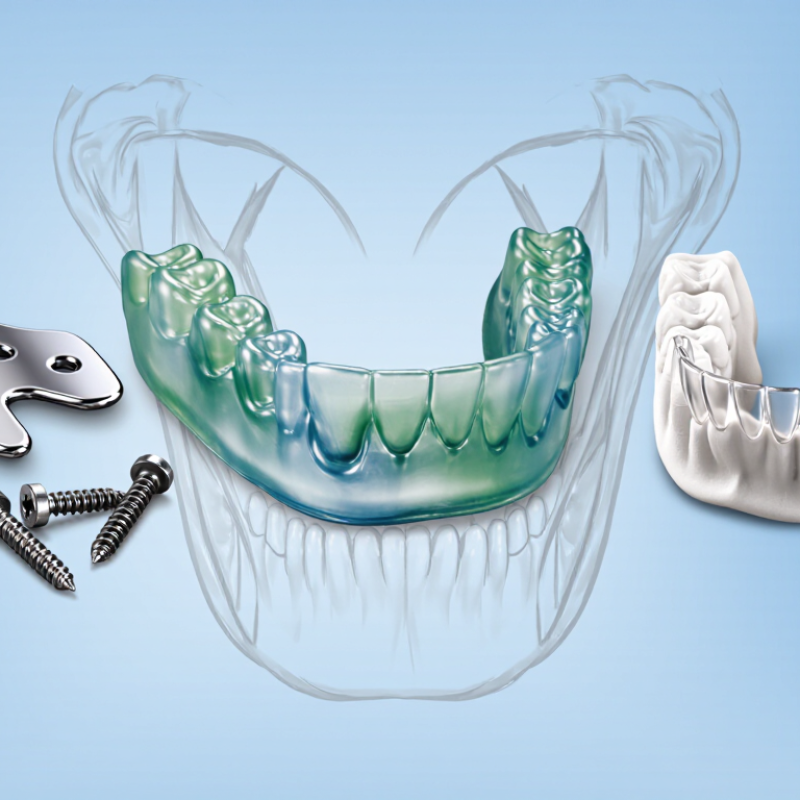
Orthognathic surgery implants are usually small titanium plates and screws, not tooth-replacement implants. Surgeons use them to hold the upper jaw, lower jaw, or both in their planned positions after bone cuts. The hardware sits beneath the gums, often near the cheek or jawline. It stabilizes healing bone while the bite and facial balance adjust. Some patients may receive custom-designed plates shaped to their anatomy. They are not necessary in every case.
A systematic review of orthognathic fixation studies reported plate removal in roughly 13% of cases. Rates varied across studies and follow-up periods, so this figure is not a personal prediction. Plates may be removed if they become exposed, infected, painful, or otherwise troublesome; many remain in place without causing symptoms. Titanium is widely used because it is strong and generally well tolerated, but no material is perfect. Small differences in healing and comfort deserve honest discussion.
Tips: Ask your surgeon what each plate does, whether it is expected to stay, and what symptoms need review. Bring a simple jaw diagram to your consultation; it can make the hardware plan easier to picture. A little uncertainty is normal.
In 2026, most orthognathic fixation still relies on small titanium plates and screws. Titanium is strong, thin, and well tolerated, making it useful for stabilizing jaw segments along the lower jaw and cheekbone. Low-profile miniplates suit many routine movements; thicker or patient-specific plates may help when anatomy or planned movement calls for more support. Fit matters. A plate should sit flush against bone, without irritating nearby soft tissue.
Resorbable plates, typically made from polymers, avoid leaving permanent metal in place, but they may be less rigid and can cause temporary swelling or require careful selection. They are not ideal for every movement. Custom titanium plates, designed from CT-based models, can match a patient’s contours and planned fixation points.
Grand View Research estimated the broader global 3D-printed medical devices market at about US$2.7 billion in 2023, with a projected 16.8% compound annual growth rate for 2024–2030. That figure covers many medical uses, not jaw surgery alone. It signals growing interest in customized manufacturing, not proof that custom plates improve every outcome. The choice depends on bone quality, movement, surgeon experience, and healing risks. There is no perfect material.
In orthognathic surgery, “implants” usually means plates and screws that hold repositioned jaw segments—not cosmetic facial implants. Surgeons choose them around the planned movement, bone thickness, bite forces, and nearby tooth roots. A short titanium plate may suit a stable, straightforward cut. Larger movements or thin bone can require a different plate shape or screw layout. Small details matter.
Virtual planning helps surgeons compare those choices before surgery. Alkhayer and colleagues’ 2020 systematic review reported discrepancies below 2 mm in most included studies, but methods and measurement points varied. That figure is useful, not a promise. A patient-specific plate can match a planned jaw position closely, while standard plates offer flexibility during surgery. Neither option replaces sound fixation or clinical judgment.
Material and manufacturing matter, too. The FDA’s 2017 guidance on additive-manufactured medical devices highlights controls for materials, production, and post-processing—key considerations for custom plates. Surgeons also weigh imaging quality, infection risk, expected healing, and whether hardware may need removal. The plan can look precise on a screen. Real bone is less tidy. Decisions should be individualized, and patients should ask how the selected fixation supports their specific correction.
In orthognathic surgery, “implants” usually means small plates and screws that hold repositioned jawbones, not tooth-replacement implants. Surgeons position these fixation devices along the jaw while protecting tooth roots and nearby nerves. Planning uses scans, bite records, and the intended final jaw alignment. AO Surgery Reference guidance places early bone healing at roughly six to eight weeks, though individual progress varies. The calendar is only a guide.
During the first days, swelling and a tight bite can make eating and speaking difficult. Follow-up visits let the surgical team check the bite, wound, and fixation. AAOMS patient guidance also describes recovery as a gradual process, with diet and activity advanced under clinical supervision. Lower-lip or chin numbness may persist for months after lower-jaw surgery. Healing is not always neat or predictable; a small change in bite deserves attention, not guesswork.
Tips: Keep follow-up appointments, use the prescribed soft-food plan, and avoid testing the new bite with hard foods. Ask your surgeon when dental implants, if needed, should be considered; placement is often planned after jaw position and healing are stable. Don’t rush it.
Orthognathic surgery usually uses small titanium plates and screws to hold repositioned jaw bones while they heal; these are fixation devices, not cosmetic jaw implants. Correcting a bite can improve chewing, speech, and facial balance, though results depend on the original problem and the surgical plan. A systematic review of bilateral sagittal split osteotomy studies found that reported sensory changes in the lower lip or chin vary widely; persistent changes at follow-up are commonly reported in the low-to-mid single digits, but some studies find higher rates. The evidence is difficult to compare because follow-up periods and sensation tests differ. Numbness can linger.
Risks include infection, bleeding, bite changes, hardware irritation, and altered sensation. In some cases, plates or screws need removal if they become exposed or uncomfortable. Long-term outcomes depend on bone healing, the type of jaw movement, and follow-up care; relapse is possible, especially when substantial movements are required. Published long-term studies generally find improved oral function and patient-reported quality of life, but they do not guarantee an identical result for every patient. An oral and maxillofacial surgeon should explain individual risks, review imaging, and discuss what symptoms merit follow-up. Ask how the team tracks bite stability and nerve sensation over time. One detail patients sometimes underestimate: recovery is not always linear. Pain may ease before normal sensation returns.
“Jaw implants” can mean either fixation hardware used to hold repositioned jaw bones during orthognathic surgery or implants added to enlarge the jaw’s appearance. These are different procedures. The options below are established categories, not a ranking; the appropriate choice depends on the diagnosis, anatomy, and surgeon’s plan.
| Option | Typical purpose | Potential benefits | Risks and limitations | Long-term considerations |
|---|---|---|---|---|
| Titanium plates and screws | Common fixation hardware used to stabilize the upper jaw, lower jaw, or both after bone repositioning. | Strong, reliable fixation; widely used; surgeons can select plate shapes and screw positions to suit the operation. | Possible infection, irritation, palpability, screw loosening, or interference with nearby structures. A small number of patients need hardware removal. | Often left in place if healing is satisfactory and the hardware causes no problems. Removal is a separate procedure and is not routinely required for everyone. |
| Bioresorbable plates and screws | Fixation for selected jaw operations, depending on the movement, loading, and device design. | Designed to break down over time, so permanent metallic hardware may not remain. Can be considered when avoiding long-term metal hardware is a priority. | Not suitable for every movement or load. Possible inflammation, infection, delayed degradation, or reduced fixation strength during healing; performance varies by material and case. | The device is gradually absorbed, but the rate and process depend on its material. Follow-up is important, and resorbable hardware does not eliminate surgical risks. |
| Patient-specific fixation plates | Custom-designed plates may be used in selected complex cases, often when a planned bone position needs individualized fixation. | Can be designed from the patient’s imaging and surgical plan; may assist with precise positioning in appropriately selected cases. | Requires planning and fabrication before surgery. Added complexity, cost, fit considerations, and the usual risks of implanted fixation hardware apply. | Long-term results depend on bone healing, the surgical plan, and the individual case. Custom design does not guarantee a better functional or cosmetic outcome. |
| Chin implant | Cosmetic chin augmentation; it does not reposition the jaws or correct a bite discrepancy. | May increase chin projection or improve facial balance in carefully selected patients. | Possible infection, shifting, asymmetry, nerve symptoms, bone changes, or need for removal or revision. It does not treat obstructive bite or jaw-position problems. | Implant position and surrounding tissues can change over time. Long-term review is appropriate if there is pain, altered sensation, movement, or a change in appearance. |
| Jaw-angle or jawline implant | Cosmetic augmentation of the mandibular angle or jawline; distinct from orthognathic surgery. | May add contour or width where the underlying anatomy and soft-tissue coverage are suitable. | Possible infection, asymmetry, implant movement, visible edges, nerve injury, or revision surgery. It does not correct skeletal malocclusion or jaw function. | Results depend on implant fit, bone and soft-tissue response, and healing. Ongoing changes or complications may require reassessment or revision. |
| Orthognathic surgery without a permanent cosmetic implant | Corrective jaw surgery repositions the patient’s own upper jaw, lower jaw, or both; fixation hardware may still be used during healing. | Can address skeletal bite problems and facial-jaw relationships. Treatment planning may involve an oral and maxillofacial surgeon and orthodontist. | Major surgery risks include bleeding, infection, altered sensation, relapse, dental or bite changes, and the possibility of further treatment. Recovery and outcomes vary. | Bone healing and bite stability require follow-up. Sensory changes may improve gradually but can persist; long-term function and appearance vary by patient. |
Important: There is no universally “top” implant or fixation system for every patient. Orthognathic surgery is planned to correct skeletal and bite relationships; cosmetic chin or jaw implants add contour and are not substitutes for corrective jaw surgery. Discuss benefits, alternatives, material choice, expected recovery, and patient-specific risks with a qualified oral and maxillofacial surgeon. This table is general information, not personal medical advice.
They are usually small plates and screws that hold repositioned jawbones. They are not tooth-replacement implants. The hardware sits beneath the gums.
They stabilize bone after the jaw is moved. This helps the bone heal in its planned position while the bite adjusts.
No. The choice depends on the planned movement, bone thickness, bite forces, and nearby tooth roots. Ask what your specific plan requires.
Not always. Custom plates can match a planned jaw position, while standard plates allow flexibility during surgery. The surgeon weighs the details.
Early healing often takes about six to eight weeks, but progress varies. That timeline is a guide, not a guarantee.
Many plates remain in place without causing symptoms. One review reported removal in roughly 13% of cases, but rates varied. That is not a personal prediction.
Report hardware exposure, infection signs, ongoing pain, or a bite that changes. Lower-lip or chin numbness may last for months. Do not guess.
Follow your surgical team’s soft-food plan and avoid testing your bite with hard foods. Keep follow-up visits. Healing takes time.
If tooth-replacement implants are needed, timing is usually discussed after jaw position and healing are stable. Ask your surgeon about your case.
Orthognathic Surgery Implants are small devices used to stabilize repositioned jaw bones and support healing after corrective jaw surgery. Depending on the procedure and a patient’s anatomy, surgeons may use plates and screws made from materials such as titanium or medical-grade polymers. Their shape, size, and placement are selected to suit the planned correction, whether it involves the upper jaw, lower jaw, or both, while accounting for bite alignment, bone structure, and individual treatment needs.
Implants are placed during surgery, and the jaw then heals over time as the bones settle into their new positions. Follow-up visits help the surgical team monitor recovery and check alignment. Potential benefits include improved jaw function and facial balance, while possible risks include infection, irritation, delayed healing, or the need for further treatment. Long-term outcomes depend on the surgical plan, healing, and ongoing care, so patients should discuss expected results and risks with a qualified surgeon.

Synoviq Medical