Selecting Spinal Internal Fixation Systems is a clinical and operational decision, not simply a comparison of product prices. Hospitals need to consider the procedures they perform, the patients they treat, and the experience of their spine teams. A system used for one surgical approach may not suit another. Fit matters.
Start by reviewing the intended indications, available configurations, and implant materials against current clinical evidence and the manufacturer’s instructions. Confirm that the implants and instruments work with the hospital’s existing workflows, including imaging, sterilization, storage, and operating-room setup. A missing instrument can disrupt a case. Small details count.
Surgeon training and familiarity also deserve attention. Even a technically capable system may require additional training or changes to established procedures. Hospital teams should assess how clearly the supplier supports education, traceability, and access to compatible components. These practical factors influence whether a system can be used consistently across a service.
A thoughtful evaluation includes more than the purchase price. Consider instrument-set availability, replenishment, service support, and the full cost of maintaining the system. Compare claims with peer-reviewed evidence, product documentation, and feedback from qualified clinical users. No checklist is perfect. Local needs differ.
This guide outlines key questions hospitals can use when evaluating options. It is not a substitute for clinical judgment or procurement review. The right choice depends on the intended use, patient needs, and the hospital’s capacity to support safe, reliable use over time. That balance can be difficult. It deserves careful review.
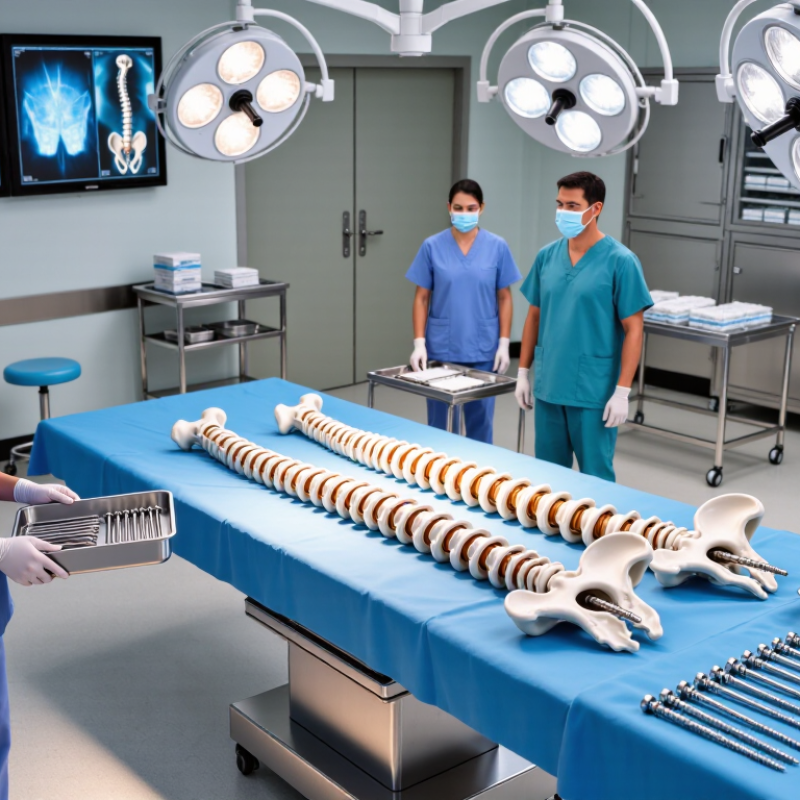
Hospitals should start with the patient’s diagnosis and planned procedure, not an implant catalogue. Is the case a short-level fusion, deformity correction, or revision? Each can require different fixation strength, screw trajectories, and instrumentation. The Global Burden of Disease 2021 study estimated that 619 million people experienced low back pain in 2020, with 843 million projected by 2050. This is a measure of disease burden, not a count of patients needing surgery. Careful selection matters.
For each procedure, teams should review anatomy, bone quality, imaging needs, and the surgeon’s preferred approach. A small detail can matter. Check whether screw lengths and rod options suit the levels being treated, and whether instruments are compatible with the hospital’s sterilization workflow. Also assess tray size, availability of backup components, and staff familiarity; delays during setup are not trivial. Published population estimates cannot determine which system fits a specific patient. Clinical judgment and current evidence must guide that decision.
A useful evaluation includes surgeons, operating-room staff, procurement teams, and biomedical engineering. Compare systems against the actual procedures performed at the hospital, then review complications, inventory use, and setup issues over time. A checklist helps, but it can still miss local workflow problems. Record those gaps and revise the selection criteria.
Hospitals comparing spinal fixation systems should begin with the anatomy and procedure, not a preferred catalog. Pedicle screw-and-rod constructs are common in thoracolumbar stabilization, while cervical cases may use lateral mass screws, plates, or other region-specific options. Hooks and wires remain relevant in selected situations, but they are not interchangeable with screw-based constructs. The surgeon’s plan and patient anatomy guide the choice.
Compatibility has several layers. Check screw diameter and length ranges, rod shape and dimensions, connector interfaces, and the instruments needed for assembly. A rod that looks similar may not lock securely into a different system’s screw head. Confirm compatibility in the manufacturer’s technical documentation; do not assume components from separate systems can be mixed. Also review sterilization instructions, tray availability, and whether the imaging and navigation tools used at the hospital support the planned workflow.
The details matter. A missing driver or an incompatible connector can disrupt a procedure, even when the implants appear suitable. Include surgeons, operating-room staff, procurement, and clinical engineering in evaluations, and verify that trial instruments match the implant set. MRI conditions and material information deserve review too. This process is not always neat; older inventory can complicate standardization. That is worth addressing openly. Hospitals should document approved combinations and escalation steps, while leaving final implant selection to qualified clinicians based on the individual case.
Choosing a spinal fixation system starts with its intended use, not its catalogue. In the United States, device classification and submission pathways vary by design and indication; confirm the applicable FDA clearance or approval and current labeling. Regulatory status matters. It is not proof of better clinical outcomes. Request traceable records for sterilization, biocompatibility, and mechanical testing. For relevant devices, FDA-recognized ASTM methods include F1717 for spinal implant constructs and F2077 for intervertebral body fusion devices. Check whether testing reflects the actual components and configurations your surgeons will use.
Evidence needs context. AHRQ’s HCUP Statistical Brief #166 reported that U.S. spinal fusion hospital stays rose about 70 percent, from roughly 287,000 in 2001 to 488,000 in 2011. That historical increase signals the scale of use, not the superiority of any system. Compare clinical studies for similar diagnoses and techniques, tracking fusion, reoperation, complications, and patient-reported outcomes over meaningful follow-up. FDA’s MAUDE database can reveal reported device problems, but reports are voluntary and lack a reliable usage denominator; they cannot establish event rates or causation. Ask for the source data. A neat summary may hide gaps. One uncomfortable question remains: would the evidence still persuade your team if the device’s familiar design were removed from consideration?
A hospital choosing spinal internal fixation systems should compare total cost, not just the implant price. Include instrument trays, sterilization time, freight, returns, and the cost of keeping rarely used sizes available. Ask suppliers for documented lead times, backorder history, and clear replacement procedures. Then compare those figures with the hospital’s actual case mix. A low unit price can look attractive, but not if trays arrive late or staff must manage too many components.
Training and supply reliability belong in the same evaluation. Surgeons, operating-room nurses, and sterile-processing staff need hands-on practice with assembly, sizing, and tray checks. In a WHO-led, multicentre study, surgical complications declined from 11.0% to 7.0% after checklist implementation; inpatient deaths fell from 1.5% to 0.8% (Haynes et al., New England Journal of Medicine, 2009). This supports structured team preparation, though it does not prove training alone caused the improvement. Real workflows are messier than a checklist.
Tips: Run a mock case before adoption. Time tray setup. Record missing parts, reprocessing steps, and questions from staff. Set minimum stock levels using local demand and supplier lead times, then review them quarterly. One awkward detail: the best system on paper may still frustrate staff. Ask them directly.
Evaluating costs, supply, and staff training
Example planning scores on a 1–5 scale, where 5 indicates a higher evaluation priority. These illustrative scores are not market data or a purchasing benchmark; hospitals should set priorities using their own costs, supply records, and training needs.
Hospitals should define clinical needs before comparing spinal internal fixation systems. Specify the procedures, spinal levels, and patient populations the system must serve. Include surgeons, operating-room staff, sterile-processing teams, and procurement specialists in the review. Their daily needs differ, and a specification written by one group may miss practical constraints.
Set measurable performance criteria. Review evidence for fatigue strength, screw purchase, rod-connection security, and compatibility among components. Request test methods, results, instructions for use, and clear limits on intended use. Check whether imaging conditions and sterilization requirements are documented. During evaluation, note how easily staff can identify components, assemble instruments, and maintain a clear view of the surgical field. A polished proposal can still leave gaps.
Build the procurement scorecard around more than unit price. Compare instrument availability, training needs, replenishment times, traceability, and the cost of maintaining different systems. Ask suppliers to explain how they handle shortages and product updates, using documented procedures rather than verbal assurances. A limited clinical evaluation can surface issues that demonstrations miss, such as a difficult-to-open tray or unclear labeling. No scorecard replaces judgment. Revisit the criteria with clinical teams after use; some assumptions will prove wrong.
Start with the diagnosis and planned procedure. A short-level fusion, deformity correction, and revision may need different fixation strengths and instruments.
Consider spinal levels, anatomy, bone quality, imaging needs, and the surgeon’s approach. Check that screw lengths and rod options fit the planned levels.
Include surgeons, operating-room staff, sterile-processing teams, procurement specialists, and biomedical engineers. Each group may notice different workflow problems.
Review evidence for fatigue strength, screw purchase, and secure rod connections. Ask for test methods, results, instructions, and intended-use limits.
Check component labels, instrument assembly, tray size, and visibility of the surgical field. A difficult-to-open tray can slow setup.
Compare availability, training needs, replenishment times, traceability, and maintenance costs. Unit price alone gives an incomplete picture.
Consider a limited clinical evaluation. Watch for unclear labels, missing backup components, and instruments that do not fit sterilization workflows.
No. A checklist can still miss local workflow issues. Record gaps and revise the criteria after teams gain experience.
Track complications, inventory use, and setup delays. Some assumptions may prove wrong; review them with clinical teams.
Choosing Spinal Internal Fixation Systems for a hospital requires balancing clinical needs with practical considerations. Start by reviewing the procedures performed, patient populations served, and surgeons’ requirements. Compare available system types for their design, materials, and compatibility with existing instruments and imaging workflows. Safety information, supporting clinical evidence, and applicable regulatory requirements should also be assessed to help ensure each option is appropriate for its intended use.
A complete evaluation should consider total costs, product availability, delivery reliability, and the training needed for surgeons, operating-room staff, and supply teams. Hospitals can then establish clear procurement criteria, such as performance expectations, documentation standards, service support, and ongoing review measures. A structured selection process helps teams choose systems that meet clinical goals while supporting consistent procedures, responsible resource use, and long-term evaluation of outcomes.

Synoviq Medical