Choosing Mandibular Reconstruction Plates in 2026 requires more than comparing prices, materials, or catalogue dimensions. The decision affects chewing, speech, facial symmetry, wound stability, and long-term patient comfort. A plate may look excellent on a digital model yet perform poorly beside thin cortical bone, irregular defects, or compromised soft tissue. Clinical judgment remains essential.
Professor Rui Fernandes, a maxillofacial reconstruction specialist, has observed, “A reconstruction plate is not merely a bridge; it is part of a functional plan.” This principle deserves attention. Surgeons should examine defect length, remaining bone quality, occlusion, loading forces, and the patient’s healing risks. Titanium remains widely used because it combines strength, corrosion resistance, and relatively low weight. However, no material solves every problem. Plate thickness, screw trajectory, contour accuracy, and fatigue resistance can matter just as much.
Small details matter.
In 2026, computer-assisted planning and patient-specific Mandibular Reconstruction Plates may improve fit and reduce intraoperative bending. Yet digital accuracy does not guarantee biological success. A poorly vascularized bed, excessive tension, or inadequate fixation can still lead to complications. This is where product claims require careful reading. Independent clinical evidence is more valuable than polished marketing language.
The ideal choice is not always the newest design. It is the option that matches anatomy, biomechanics, surgical experience, and follow-up resources. Some decisions will remain uncertain. That uncertainty should be discussed openly, documented clearly, and reviewed against real patient outcomes.
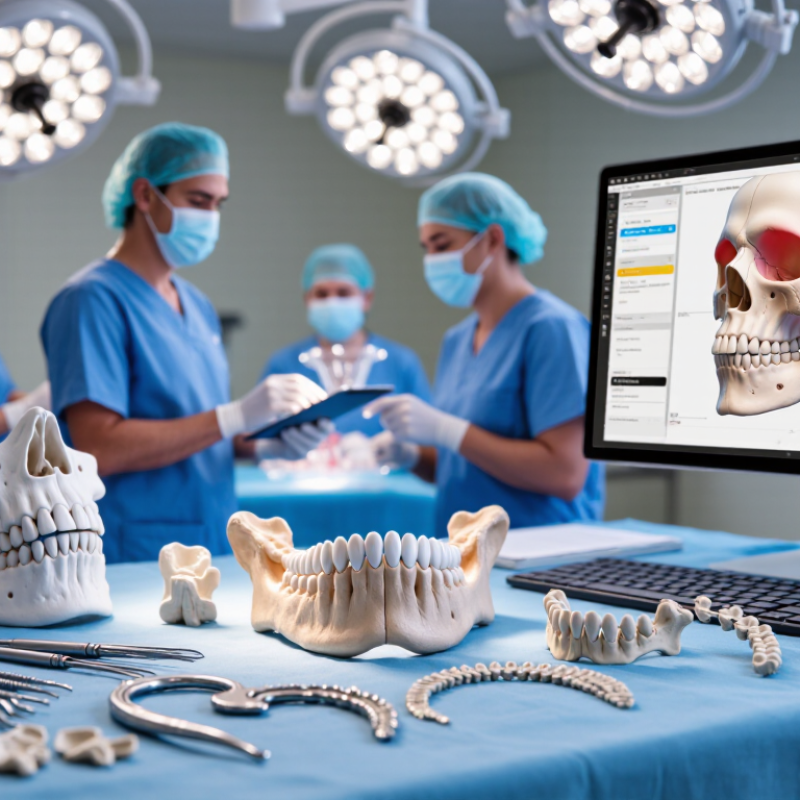
How to Choose Mandibular Reconstruction Plates in 2026?
Plate selection should begin with the defect, occlusion, and expected functional load. A marginal defect differs from a segmental defect. A condylar resection changes loading patterns again. Map the remaining bone, soft-tissue coverage, and dental contacts before choosing thickness or geometry. The WHO Global Oral Health Status Report 2022 estimates that nearly 3.5 billion people live with oral diseases, highlighting the broad reconstructive burden worldwide.
Occlusion is not a final check. It is a design input. Confirm the preoperative bite when possible, then assess whether the reconstruction must support teeth, a future prosthesis, or neither. A patient with strong posterior contacts may generate considerable bending forces. A non-occluding segment may tolerate less rigid support, but healing quality still matters. Small errors become visible at the chin.
Defect length, graft support, and muscle pull should guide load assessment. Published systematic reviews report complication rates for mandibular reconstruction that commonly range from 20% to 40%, although definitions and follow-up periods vary. Hardware exposure, loosening, and fracture are not plate problems alone. They may reflect poor vascularity, soft-tissue tension, infection, or unrecognized occlusal force. Clinical planning should therefore combine CT measurements, occlusal records, and multidisciplinary review. I would not rely on a familiar plate profile without checking these variables. That shortcut is convenient. It is also where judgment can fail.
Mandibular reconstruction plates should match mechanical demand, not simply surgeon preference. A 2.0 mm plate may suit a short, low-load defect with strong bone contact and reliable occlusion. A 2.4 mm plate offers a practical middle option for moderate defects. A 2.8 mm plate is more appropriate for longer segmental gaps, poor bone quality, or greater bending forces.
Biomechanical testing consistently shows that thicker plates resist bending and fatigue better. However, stiffness is not automatically safer. Excessive rigidity can increase stress concentration around screws and may complicate contouring. Reviews in the Journal of Cranio-Maxillofacial Surgery report plate-related complications commonly within the high-single to low-double-digit percentage range, depending on defect size, radiation exposure, infection, and fixation design. These figures are not universal. Clinical evidence remains uneven.
Tips: Measure the defect, occlusal load, and available bone before selecting thickness. Use at least three stable screws on each side when anatomy permits. Check the inferior border contour carefully; a visible gap can turn a strong plate into a lever. FDA post-market reports can reveal failure patterns, but they cannot calculate true complication rates. I would not treat 2.8 mm as the default “safer” choice. Patient-specific loading, soft-tissue coverage, and screw purchase often matter more than a small thickness increase. That is where planning can still be imperfect.
How to Choose Mandibular Reconstruction Plates in 2026?
Plan at Least 3 Screws in Each Stable Mandibular Segment
Choosing a mandibular reconstruction plate starts with the fracture pattern, defect length, and expected functional load. Three-dimensional CT helps define stable bone, screw corridors, and the inferior alveolar canal. The key planning rule is simple: place at least three screws in each stable mandibular segment. This is a planning minimum, not a substitute for judgment. Bone quality matters. A thin segment may need greater fixation length or a different construct.
Each screw should engage reliable bone, not merely fill holes on a template. I check bicortical purchase when anatomy permits, while protecting tooth roots, the canal, and soft tissue. Near the condyle, ramus, or symphysis, available space can be deceptive. Three screws may fit on the screen but fail clinically if their trajectories converge. Measure carefully. Confirm occlusion before final tightening. A stable bite is useful evidence, but it cannot prove fixation strength.
Plate contour should follow the reconstructed mandibular arch without forcing the bone into position. More screws are not always better; unnecessary drilling can weaken a small segment. This is where experience remains imperfect. A virtual plan may look excellent, yet intraoperative bone quality can disagree. Reassess after exposure, and document why the final screw count changed. The number guides planning, but anatomy decides.
Choosing mandibular reconstruction plates in 2026 requires more than checking strength, shape, and screw compatibility. Titanium may perform well clinically, but its biological safety must be verified under ISO 10993 requirements. This standard is not a simple “biocompatible” label. It supports a risk-based evaluation of the finished device, including materials, manufacturing residues, sterilization, and tissue contact duration.
For mandibular plates, review the intended contact with bone, soft tissue, and blood. The assessment may include cytotoxicity, sensitization, irritation, systemic toxicity, and implantation studies, depending on the risk profile. Chemical characterization can reveal processing residues or unexpected substances. A polished surface can look perfect under operating-room lights, yet surface contamination may remain invisible. Traceability matters. Request test reports linked to the exact plate material, coating, and production process.
Clinical teams should also examine whether the evidence reflects actual use. A report on raw titanium may not represent a machined, cleaned, packaged, and sterilized plate. That gap deserves attention. No single test answers every question. ISO 10993 evaluation should connect laboratory findings with clinical experience, foreseeable misuse, and patient-specific factors such as prior metal sensitivity or complex reconstruction. Documentation should be current, independently reviewed, and easy to follow during procurement and surgical planning. Overlooking one small manufacturing change can weaken an otherwise convincing safety assessment.
| Evaluation Dimension | What to Verify | Relevant Standard or Reference | Evidence to Request | Selection Guidance | Priority |
|---|---|---|---|---|---|
| Intended clinical use | Confirm whether the plate is intended for segmental mandibular reconstruction, trauma fixation, tumor resection, osteotomy, or temporary stabilization. | Risk-based biological evaluation under ISO 10993-1 | Device intended-use statement, anatomical indication, implant duration, and clinical-risk assessment. | Choose a system whose validated indication matches the defect size, bone quality, fixation method, and expected healing period. | High |
| Titanium material grade | Verify the exact alloy, material condition, manufacturing route, and mechanical-property specification. Common implant-grade options include commercially pure titanium or wrought Ti-6Al-4V alloy. | ISO 5832-2 for commercially pure titanium; ISO 5832-3 for wrought titanium-6aluminium-4vanadium alloy | Material certificate, chemical composition, lot traceability, heat-treatment information, and applicable conformity documentation. | Do not accept “medical-grade titanium” as a sufficient description without the precise grade and applicable material standard. | High |
| Biological contact profile | Classify the plate as a permanent implant contacting bone, tissue, and potentially body fluids. Consider the plate, screws, coatings, residues, and processing aids as the complete patient-contacting system. | ISO 10993-1 | Biological evaluation plan and biological evaluation report covering all patient-contacting materials and manufacturing residues. | The evaluation should address the finished device or a scientifically justified representative configuration, not only the raw titanium bar. | High |
| Cytotoxicity | Assess whether extracts or direct-contact samples cause unacceptable cell toxicity under the selected test conditions. | ISO 10993-5 | Test report identifying sample preparation, extraction conditions, cell system, controls, acceptance criteria, and results. | Require acceptable results for the final processed device, especially when coatings, marking agents, adhesives, or cleaning residues are present. | High |
| Sensitization and irritation | Evaluate the potential for delayed skin or tissue sensitization and local irritation from the finished device and extractable substances. | ISO 10993-10 for skin sensitization; ISO 10993-23 for irritation | Current test reports or a justified biological-evaluation rationale based on chemical characterization and previous data. | Pay particular attention to surface treatments, colorants, passivation chemicals, lubricants, and packaging-contact residues. | High |
| Systemic toxicity | Consider acute, subacute, subchronic, chronic, or other systemic effects when chemical characterization indicates relevant released substances. | ISO 10993-11 and ISO 10993-17 | Systemic-toxicity assessment, toxicological risk assessment, exposure calculation, and margin-of-safety rationale. | A separate systemic-toxicity study may not always be necessary when robust chemical characterization and toxicological assessment adequately address the risk. | High |
| Chemical characterization | Identify and quantify extractable and leachable substances from the finished plate, including metals, organic residues, processing chemicals, and coating constituents. | ISO 10993-18; toxicological interpretation under ISO 10993-17 | Analytical methods, extraction solvents, extraction ratios, temperature and duration, detected substances, reporting limits, and toxicological assessment. | Prefer data generated from the final manufacturing state, including cleaning, passivation, surface finishing, and sterilization processes. | High |
| Metal ions and corrosion products | Assess elemental release and corrosion-related products under clinically relevant conditions. Titanium alloys form a passive oxide layer, but surface damage and mixed-metal contact still require evaluation. | ISO 10993-15; chemical characterization under ISO 10993-18 | Metal-ion release data, corrosion assessment, surface-finish specification, galvanic-corrosion rationale, and results for the plate-screw combination. | Avoid unassessed dissimilar-metal combinations and verify that the selected plate and screws are compatible as a complete fixation system. | High |
| Genotoxicity and long-term endpoints | Determine whether chemical characterization identifies substances that require assessment for genotoxicity, carcinogenicity, or reproductive and developmental toxicity. | ISO 10993-3 and ISO 10993-17 | Endpoint-specific risk assessment, test reports where required, and documented rationale for any omitted endpoint. | Use a risk-based approach. Do not claim that titanium is automatically exempt from all long-term biological evaluation. | High |
| Local tissue response and implantation | Assess local tissue response when required by the risk profile, especially for new materials, novel coatings, unusual surface treatments, or degradation concerns. | ISO 10993-6 | Implantation study or scientifically justified rationale based on established materials, equivalent processing, and chemical characterization. | Request additional evidence when the plate includes a novel coating, porous layer, resorbable component, or other nontraditional feature. | Medium |
| Degradation and resorbable components | Verify whether any coating, polymer, bioactive layer, or temporary component can degrade in the mandibular environment and whether degradation products are characterized. | ISO 10993-9, with applicable material-specific degradation standards such as ISO 10993-13 for polymeric materials | Degradation study, degradation-product identification, local and systemic risk assessment, and duration justification. | For an uncoated metallic plate, document why degradation testing is not applicable; for coated or composite devices, require a clear degradation strategy. | Medium |
| Mechanical strength and bending performance | Verify bending strength, stiffness, screw-hole integrity, deformation resistance, and resistance to clinically relevant loading. | ASTM F382 for metallic bone plates; applicable regional or device-specific requirements | Bench-test protocol, fixture design, specimen orientation, loading mode, failure definition, statistical analysis, and comparison with the intended clinical load. | Choose sufficient strength without excessive bulk. Do not rely solely on alloy tensile strength; plate geometry and screw fixation strongly affect performance. | High |
| Fatigue resistance | Evaluate cyclic loading because mandibular plates may experience repeated forces from mastication, speech, muscle activity, and functional movement. | Applicable fatigue methods under the device risk-management plan; mechanical testing principles may be supported by ASTM F382 | Fatigue test conditions, cycle count, load ratio, specimen configuration, screw configuration, failure location, and acceptance criteria. | Require testing that represents the plate-screw-bone construct rather than a plate tested in isolation whenever construct failure is the clinically relevant risk. | High |
| Plate contouring and fatigue impact | Determine whether intraoperative bending is permitted, how many bends are allowed, and whether bending near screw holes or sharp transitions is restricted. | Manufacturer design validation and risk-management documentation | Validated contouring instructions, bending-tool compatibility, re-bending limitations, and post-contouring mechanical data. | Select a plate that can achieve the required mandibular contour without creating localized stress concentrations or damaging screw holes. | High |
| Surface condition and cleanliness | Inspect surface roughness, burrs, sharp edges, embedded particles, machining residues, passivation condition, and cleanliness after final processing. | ISO 10993-19 for physicochemical, morphological, and topographical characterization; applicable cleaning validation requirements | Surface inspection records, roughness data where relevant, particulate and residue limits, cleaning validation, and passivation documentation. | Prefer a smooth, burr-free, consistently finished surface that minimizes tissue irritation and unintended particle release. | High |
| Sterilization and packaging | Confirm the validated sterilization method, sterility assurance level, packaging integrity, shelf life, and compatibility of the process with titanium and any nonmetallic components. | ISO 11135 for ethylene oxide sterilization; ISO 11137 for radiation sterilization; ISO 17665 for moist heat sterilization | Sterilization validation, residuals assessment where applicable, packaging validation, shelf-life data, and sterile-barrier integrity results. | If ethylene oxide is used, verify residual limits under ISO 10993-7. Confirm that the sterile packaging remains intact through transport and storage. | High |
| Imaging and postoperative compatibility | Assess radiographic visibility, artifact behavior, and compatibility with the imaging methods used for postoperative assessment. | Device-specific imaging evaluation and clinical-use requirements | Imaging artifact assessment, radiographic visibility information, and documented MRI safety or conditional-use information where applicable. | Ensure the implant does not obstruct evaluation of the reconstruction site and that MRI conditions are clearly defined when relevant. | Medium |
| Traceability and change control | Verify traceability from raw material through machining, surface treatment, cleaning, packaging, sterilization, and release. | Quality-system and risk-management documentation; applicable regulatory requirements | Lot or batch records, certificates of analysis, supplier controls, nonconformance records, and formal change-notification procedures. | Require notification and reassessment when alloy grade, machining process, surface finish, cleaning agent, sterilization method, or packaging changes. | High |
| Clinical and post-market evidence | Review clinical performance, plate breakage, screw loosening, infection, exposure, revision surgery, and other device-related complications. | Clinical evaluation and post-market surveillance requirements | Clinical evaluation report, relevant peer-reviewed evidence, complaint trends, adverse-event review, and corrective-action history. | Use mechanical and ISO 10993 data together with clinical evidence; laboratory biocompatibility results alone do not establish clinical suitability. | High |
Note: ISO 10993 testing should be selected through a documented, risk-based biological evaluation of the finished device and its manufacturing process. The exact test program may vary according to materials, coatings, contact duration, sterilization method, chemical-characterization results, and applicable regulatory requirements.
Choosing a mandibular reconstruction plate in 2026 requires more than checking strength or price. Audit the manufacturer’s ISO 13485 system, not just its certificate. The certificate should cover implant design, machining, cleaning, packaging, and post-market surveillance. Confirm the certification body’s accreditation and certificate validity. Review CAPA records, supplier controls, lot traceability, and sterilization validation. A certificate alone does not prove clinical suitability.
Regulatory status must match the intended procedure and market. Check the device’s authorization route, indications, UDI records, labeling, and safety notices. In the United States, compare the submission number with FDA databases and review relevant recall or adverse-event records. FDA’s FY2024 CDRH reporting shows that 510(k) decisions still require substantial review, despite improving review performance. Clearance is not the same as proven superiority. That distinction matters.
Clinical evidence should include recent cohorts, follow-up beyond one year, and plate-related outcomes. A 2023 systematic review reported mandibular reconstruction hardware exposure rates commonly near 10–20%, depending on anatomy and treatment. Infection, screw loosening, fracture, and secondary removal deserve separate reporting. Ask whether results include irradiated patients and fibula-flap cases. They often do not. I would also inspect radiographs showing contour accuracy and screw positioning. Strong laboratory testing can miss wound breakdown in real patients. Data gaps should be documented openly, because uncertainty is itself a procurement risk.
Verify strength, shape, screw compatibility, biological safety, and clinical evidence. The finished device matters, not raw titanium alone.
It provides a risk-based framework for evaluating the finished implant. Assessment may include cytotoxicity, sensitization, irritation, systemic toxicity, and implantation.
Review contact with bone, soft tissue, and blood. Contact duration also affects the required testing.
It can identify cleaning residues, processing substances, or unexpected contaminants. A polished surface may still hide contamination.
Request reports linked to the exact material, coating, production process, and sterilization method. Traceability should reach the relevant production lot.
No. A machined, cleaned, packaged, and sterilized plate may behave differently. That evidence gap needs explicit review.
Review design controls, machining, cleaning, packaging, supplier controls, CAPA records, sterilization validation, and lot traceability. A certificate alone is not enough.
Confirm authorization, intended indications, labeling, UDI records, and current safety notices. The regulatory route must match the planned procedure and market.
Review infection, exposure, screw loosening, fracture, and secondary removal separately. Follow-up beyond one year is especially useful.
Check whether studies include irradiated patients and fibula-flap reconstruction. Strong laboratory results can miss wound breakdown. I would document uncertainty rather than hide it.
Choosing Mandibular Reconstruction Plates in 2026 should begin with a clear assessment of the defect type, occlusion, bone quality, and expected functional load. The plate must support the reconstruction without interfering with bite alignment, soft-tissue healing, or long-term mandibular function. Plate thickness, typically ranging from 2.0 to 2.8 mm, should be matched to the size and location of the defect, the mechanical demands of the jaw, and the stability of the reconstructed segment. Surgical planning should also provide at least three screws in each stable mandibular segment whenever anatomy and clinical conditions allow, helping distribute forces and reduce fixation stress.
Material safety and manufacturing quality are equally important. Titanium used for these plates should be evaluated for biocompatibility in accordance with ISO 10993 requirements. Buyers and clinical teams should also review ISO 13485 manufacturing controls, applicable regulatory status, traceability, and relevant 2026 clinical evidence. A balanced selection process combining biomechanics, patient-specific anatomy, material verification, and current quality data can support safer and more predictable mandibular reconstruction.

Synoviq Medical