China Best Posterior Pedicle Screw Systems Supplier?

Time:2026-11-25 Author:Amelia
0%

Choosing a China-based supplier for Posterior Pedicle Screw Systems takes more than comparing prices or catalog images. These implants must fit the intended surgical approach, support reliable fixation, and arrive with clear technical documentation. Small details matter: screw dimensions, rod compatibility, instrument fit, packaging integrity, and traceability across production batches. In spine surgery, a mismatch is not a minor inconvenience.

Spine surgeon and researcher Dr. Alexander R. Vaccaro is known for work in spinal disorders and treatment. A practical summary of the clinical perspective reflected in such work—not a verbatim quotation—is: “Implant selection should serve the patient’s needs, not simply the product catalog.” That distinction matters when evaluating suppliers. Ask how design choices are documented, how manufacturing consistency is monitored, and what evidence supports the system’s intended use. Request current quality and regulatory documents relevant to your market, and verify them independently.

Look closely. Ask specific questions. A polished brochure cannot replace transparent records, responsive technical support, and dependable communication. Supplier audits, sample reviews, and clear complaint-handling procedures can reveal gaps before purchasing decisions are made. Yet no supplier should be judged by a single claim or feature. Compare several qualified manufacturers against the same criteria, and involve appropriate clinical, quality, and regulatory professionals. China offers a broad manufacturing landscape, but capability varies. The strongest sourcing decision comes from evidence, careful review, and honest recognition that no system is right for every patient or surgical plan.
China Best Posterior Pedicle Screw Systems Supplier?

What Posterior Pedicle Screw Systems Are

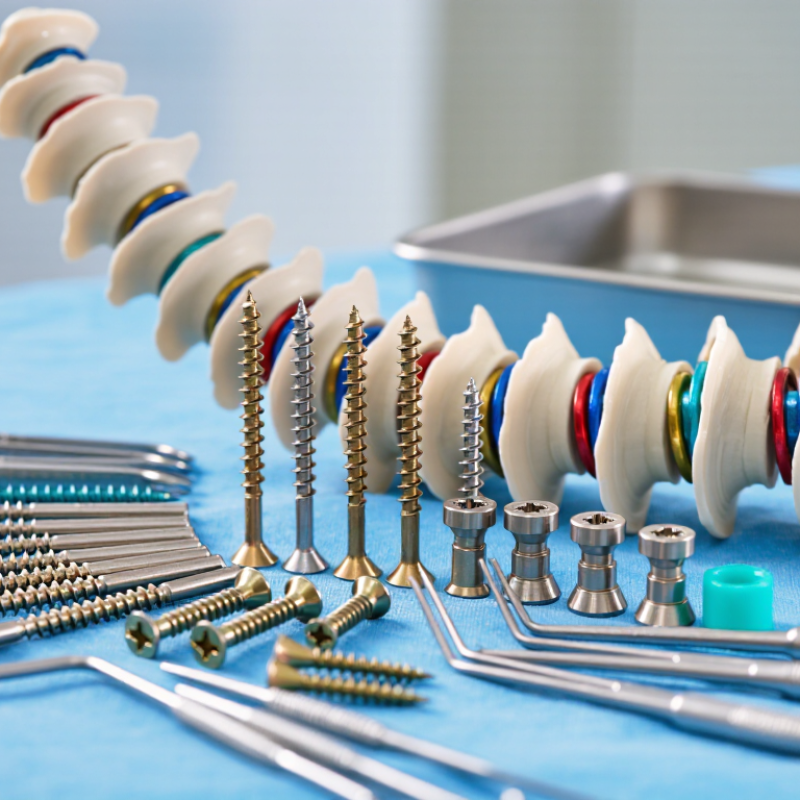
Posterior pedicle screw systems are medical devices used to help stabilize parts of the spine. Surgeons place screws through the back of the spine and into the pedicles, small, sturdy bridges of bone beside each vertebral body. Connecting rods link the screws and help control movement across the treated area. Some systems also include connectors or cross-links, depending on the surgical plan.

The components may look simple on a tray. Their placement is not. The surgeon considers the patient’s anatomy, bone quality, spinal condition, and imaging before choosing screw dimensions and positions. During surgery, careful placement matters because nerves and blood vessels lie close to the working area. The system may be used in procedures for conditions such as spinal instability or certain fractures, but it does not treat every back problem. It is not a cure by itself.

Details matter. Recovery and outcomes vary. A device can provide mechanical support, yet healing also depends on the patient’s health and the procedure performed. It is easy to focus only on the hardware. The clinical judgment behind its use deserves equal attention. Patients should ask their spine specialist what the system is intended to do, what risks apply, and what follow-up care may involve.

Key Components and Common Surgical Applications

A posterior pedicle screw system usually includes screws, connecting rods, screw heads, locking caps, and placement instruments. Screws anchor into the vertebral pedicles, while rods link the treated levels and help maintain alignment. The head design affects rod seating and the surgeon’s ability to adjust fixation during the procedure. Small parts matter. Instruments such as awls, probes, taps, and drivers support preparation and placement, with imaging used to check position.

These systems are commonly used during spinal fusion for selected cases of degenerative instability, spondylolisthesis, deformity, or certain fractures. The number and location of screws depend on the affected levels, bone quality, anatomy, and surgical plan. A system that works well in one case may not suit another. Fit is not everything.

Material, dimensions, locking behavior, and compatibility between components should be reviewed before surgery. Clear labeling and consistent instrument handling can reduce avoidable confusion in the operating room. Still, no device design removes the challenge of accurate placement. Patient-specific anatomy can be less predictable than a scan suggests, and that deserves honest attention. Surgeons should make treatment decisions using clinical judgment, imaging, and current evidence.

China Best Posterior Pedicle Screw Systems Supplier? - Key Components and Common Surgical Applications

System Component or Configuration Typical Materials or Design Function Common Surgical Applications Selection Considerations
Pedicle screws Commonly made from titanium alloy or stainless steel; available in different diameters, lengths, and thread designs. Anchor the posterior construct to the vertebrae through the pedicles. Posterior fixation for selected cases of spinal instability, deformity, trauma, and fusion. Size and trajectory are selected according to patient anatomy, imaging, bone quality, and the surgical plan.
Monoaxial screw heads Fixed-angle head connected to the screw shaft. Provides a relatively rigid screw-head orientation for rod engagement and construct control. May be used when a fixed head orientation is suitable for the planned alignment and rod placement. Offers less head angulation during assembly than a polyaxial design; suitability depends on anatomy and technique.
Polyaxial screw heads Head can pivot relative to the screw shaft before final locking. Facilitates rod capture when screw trajectories are not parallel. Commonly used in posterior thoracolumbar fixation and fusion constructs. Confirm compatible screw, rod, and locking components within the same system.
Connecting rods Typically manufactured from titanium alloy or stainless steel; offered in different diameters and lengths. Link the screw heads to form a stabilizing construct. Used in short- or long-segment posterior fixation, depending on the indication and surgical plan. Rod material, diameter, contour, and compatibility must match the selected system and intended construct.
Locking caps or set screws Threaded locking components designed for a specific screw-head and rod interface. Secure the rod within each screw head after positioning. Used whenever a rod-based screw construct is assembled. Use the specified insertion instruments and tightening method; components are generally system-specific.
Cross-connectors Transverse connectors that join two longitudinal rods. Can add transverse linkage to a bilateral rod construct. May be considered in selected multilevel constructs when the surgeon determines additional linkage is appropriate. Not required in every construct; placement and use depend on the operative plan and device instructions.
Fenestrated pedicle screws Screws with openings that may allow bone cement delivery when used with a compatible technique. Can provide an option for cement augmentation in selected cases of reduced bone quality. May be considered for certain patients with compromised bone quality, subject to device labeling and clinical judgment. Cement use carries risks, including leakage; patient selection, imaging, technique, and applicable instructions are essential.
Posterior lumbar fixation and fusion Usually uses pedicle screws and rods across one or more spinal levels. Stabilizes the selected segment while fusion is intended to occur. May be used for selected degenerative conditions, instability, or other indications when fusion is planned. Indication, levels, and whether fusion is appropriate are determined by the treating spine surgeon.
Thoracolumbar trauma fixation Construct configuration varies with injury pattern, anatomy, and treatment goals. Provides posterior stabilization of selected spinal injuries. May be used in the management of certain thoracic or lumbar fractures. Fracture pattern, neurological status, bone quality, and the need for additional treatment influence planning.
Deformity correction May involve multiple screws and contoured rods across several vertebral levels. Supports correction and maintenance of alignment as planned by the surgical team. Used in selected cases of spinal deformity, including some scoliosis procedures. Requires individualized planning; construct length and configuration depend on the patient and deformity.

Important: This table is general educational information, not a product recommendation or clinical guidance. Device selection, compatibility, and use should follow the applicable instructions for use and the judgment of qualified healthcare professionals.

How Posterior Pedicle Screw Systems Are Manufactured

A posterior pedicle screw system begins with controlled design specifications. Engineers define screw diameter, thread pitch, rod dimensions, and connection geometry around the intended clinical use. Material certificates are checked before production, and each material must match the approved design. Small details matter.

Computer-controlled machining forms the screw threads, drive recesses, and connecting heads. Rods are shaped to specified contours, while mating components are checked for fit. Operators monitor tool wear because a worn cutter can change a thread or leave a rough surface. That variation may look minor, but it matters. Parts then undergo cleaning and any material-specific finishing steps defined by validated procedures.

Inspection continues throughout production. Gauges and coordinate-measuring equipment verify critical dimensions; visual checks look for burrs, scratches, and surface defects. Assemblies are tested for component compatibility, and production records link finished lots to their materials and inspection results. Packaging and sterilization, when applicable, follow validated processes for the product configuration. A polished surface alone proves little. Even careful manufacturing cannot remove every source of variation, so supplier audits and transparent records remain important when evaluating a manufacturer in China.

Quality and Regulatory Standards for Chinese Suppliers

China Best Posterior Pedicle Screw Systems Supplier?
Quality and Regulatory Standards for Chinese Suppliers

A reliable supplier should show more than a polished catalog. Ask for current quality certificates, product registration details, and traceability records for each implant. The ISO Survey 2022 counted 34,096 ISO 13485 certificates worldwide. That figure shows broad adoption, not product safety or supplier performance. A certificate is a starting point, not proof.

For posterior pedicle screw systems, review material specifications, dimensional inspection results, and mechanical test reports. ASTM F1717 provides a test method for spinal implant constructs; request reports identifying the tested configuration and acceptance criteria. Check that lot records connect raw material certificates with finished-device inspection. For China-made products, verify applicable NMPA registration and confirm that the documents match the exact model offered. Export requirements may differ by destination. Paperwork can look complete and still leave gaps.

Tips: Request a sample batch record and a recent audit summary. Compare screw dimensions against the approved drawings, not only a brochure. Ask how nonconforming parts are isolated and investigated. Then check whether corrective actions were verified. Small details matter. Supplier responses may be imperfect; unclear answers deserve follow-up, not assumptions.

Quality and Regulatory Milestones for Posterior Pedicle Screw Suppliers

A timeline of relevant quality-management standards and regulatory frameworks

The year shown is the edition year for ISO standards or the general application/effective year for regulations; these milestones are not supplier scores or a ranking. Supplier qualification should also verify applicable market authorization, product-specific evidence, and quality-system documentation. References: ISO 13485:2016; ISO 14971:2019; Regulation (EU) 2017/745; China’s Medical Device Good Manufacturing Practice, effective 2023.

How to Evaluate and Select a Suitable Supplier

China Best Posterior Pedicle Screw Systems Supplier?
How to Evaluate and Select a Suitable Supplier

The World Health Organization’s 2022 musculoskeletal health fact sheet estimates that 1.71 billion people live with musculoskeletal conditions. This figure indicates broad treatment needs, but it does not prove that any particular screw system is suitable. Buyers should compare suppliers using verifiable product evidence, not catalog claims alone.

Request documentation for the exact implant family, including material specifications, dimensional tolerances, fatigue testing, and traceability records. Check whether the supplier operates a quality management system aligned with ISO 13485 and applies risk-management principles from ISO 14971. Ask how design changes are communicated and how complaints are investigated. Clear answers matter.

Numbers matter. Context matters more. Review test methods, sample sizes, and whether results apply to the configuration being purchased. Confirm sterilization validation when sterile products are supplied, along with documentation required in the intended market. A polished audit file can still leave practical gaps. No checklist is perfect; clinical fit may be missed when evaluation focuses only on price and paperwork. A supplier’s responsiveness to a specific technical question can reveal as much as its brochure.

FAQS

What does a posterior pedicle screw system do?

Screws anchor in the pedicles, small bridges of bone beside each vertebra. Connecting rods help limit movement across the treated area. It provides support, not a cure.

What should a surgeon consider before choosing a system?

Patient anatomy, bone quality, spinal condition, and imaging all matter. Screw size and position need careful planning. Small differences can matter.

What records should a supplier provide?

Request current quality certificates, product registration details, and traceability records for the exact model. A certificate alone is not proof of product performance.

How can buyers assess product testing?

Review material specifications, dimensional checks, and mechanical test reports. For ASTM F1717 testing, confirm the tested configuration and acceptance criteria. Details can be easy to overlook.

What should traceability records connect?

They should link raw material certificates with finished-device inspection records. Ask for a sample batch record. Check that the lot numbers match.

How can buyers check whether documents fit the intended market?

Confirm applicable registration documents match the exact product model. Export requirements vary by destination. Paperwork may look complete, yet leave gaps.

What questions help assess a supplier’s quality process?

Ask how design changes are communicated and how complaints are investigated. Find out how nonconforming parts are isolated. Then ask whether corrective actions were verified.

Why shouldn’t buyers rely only on price and paperwork?

Clinical fit may be missed when evaluation focuses only on cost and documents. Supplier responsiveness to a specific technical question can be revealing. Not always, though.

Conclusion

Posterior Pedicle Screw Systems are spinal fixation solutions designed to stabilize vertebrae and support alignment during selected spinal procedures. Their typical components include pedicle screws, connecting rods, and compatible connectors, with configuration and placement determined by the clinical plan and patient needs. Understanding how these parts work together can help readers compare system designs and their common surgical applications.

Manufacturing involves material selection, precision machining, surface finishing, inspection, and packaging under controlled processes. When evaluating Chinese suppliers, buyers should review documented quality-management practices, product traceability, technical information, and applicable regulatory clearances for the intended market. A careful supplier assessment should also consider manufacturing capacity, consistency, communication, after-sales support, and the availability of reliable product documentation. These factors provide a practical basis for comparing suppliers and selecting a suitable option without relying on price alone.

Amelia

Amelia

Amelia is a seasoned marketing professional with a wealth of expertise in our company’s core offerings. With an unwavering passion for driving growth and innovation, she plays a pivotal role in shaping our marketing strategies and enhancing brand visibility. A key aspect of her responsibilities......