Herbert Screws remain important in modern fracture fixation, especially for small-bone injuries where stability and a smooth joint surface matter. The American Academy of Orthopaedic Surgeons identifies the scaphoid as the most frequently fractured carpal bone. Clinical reviews also report that scaphoid injuries represent roughly 60% to 70% of carpal fractures. These figures explain why screw design still deserves careful attention.
Peter Herbert, the surgeon associated with this implant, described its purpose as providing “compression across the fracture without a prominent screw head” in the original Herbert screw technique literature (Herbert and Fisher, 1984). That principle still guides buying decisions. A fully threaded headless screw may suit one fracture pattern, while a variable-pitch design may offer better compression in another. Length, thread position, cannulation, alloy, and driver compatibility are not minor details. They affect purchase accuracy, fixation strength, and revision risk.
Market reports from Grand View Research and Fortune Business Insights show continued growth in the global orthopedic implants sector, driven by trauma care, aging populations, and minimally invasive procedures. However, these reports rarely separate Herbert Screws from the wider screw market. That limitation matters. A large market number does not prove clinical superiority. This 2026 guide compares the main Herbert Screws types, practical specifications, and purchasing considerations. It also questions common assumptions, because “top” can mean best value, best compression, or simply easiest availability.
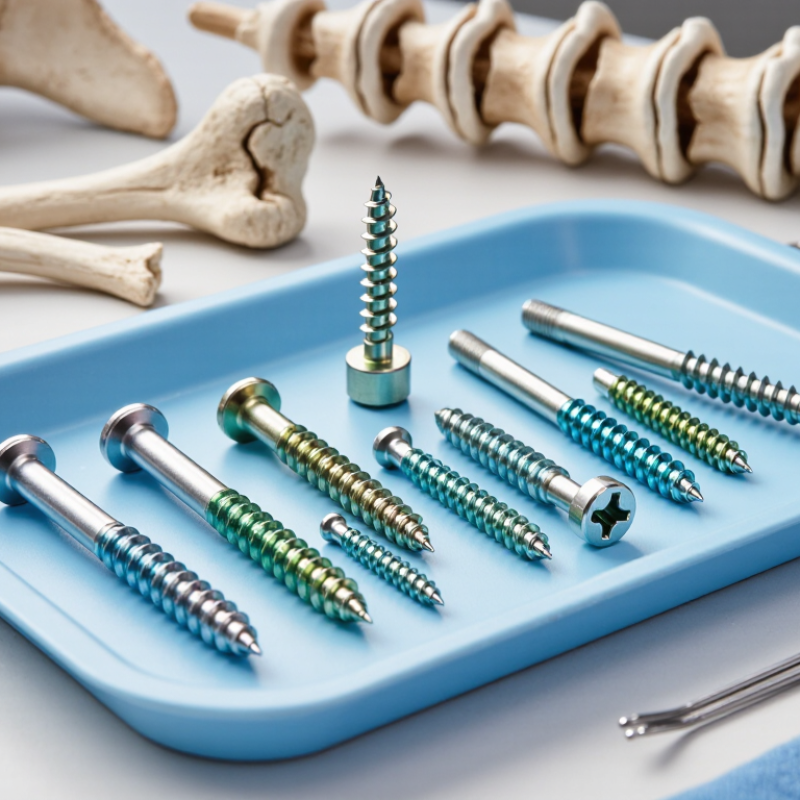
Herbert screws are headless, partially or fully threaded bone screws designed to stabilize small fractures and create controlled compression. Their defining feature is a differential pitch: the threads near each end advance at different rates. As the screw enters both bone fragments, this pitch difference draws the fragments together. The screw sits beneath the bone surface, reducing irritation to nearby soft tissue.
Many Herbert screws are cannulated, with a central channel for guide-wire placement. This design supports accurate positioning during minimally invasive procedures. A surgeon can check the guide wire under imaging before drilling and inserting the screw. Common applications include fractures involving the scaphoid, foot, ankle, and other small bones, although suitability depends on anatomy and fracture pattern. The screw’s diameter, length, thread profile, and material all affect fixation performance.
In practical use, measurement deserves careful attention. A screw that is too short may not engage both fragments. One that is too long can damage surrounding tissue or reach an unintended joint surface. The entry point also matters because headless screws require proper countersinking and stable bone purchase. Surgical experience shows that compression is not automatically beneficial; excessive force may affect fragile bone or disrupt alignment. That detail is easy to overlook. Selection should follow imaging, bone quality, instrument compatibility, and the treating clinician’s judgment. Manufacturers may publish specifications, but those figures cannot replace clinical assessment.
Herbert screw selection starts with structure, not appearance. The classic headless compression screw uses two different thread pitches. The larger distal pitch advances faster, drawing the fracture surfaces together as the screw turns. Its buried profile reduces irritation around cartilage or tendons. AO Foundation surgical guidance identifies this design as useful for small-joint and cancellous-bone fixation, but compression depends heavily on accurate screw length.
Partially threaded Herbert screws create compression across a fracture gap. Their smooth shaft must cross the near fragment without gripping it. Fully threaded versions provide stronger purchase along the entire length, yet they usually create less interfragmentary compression. That difference matters in unstable fractures. Cannulated screws include a central guidewire channel, improving trajectory control during minimally invasive placement. Non-cannulated screws may offer greater core strength, but they demand more precise drilling.
A 2023 systematic review of headless compression screws reported consistently strong union results in selected carpal and foot fractures, while also noting varied study methods and limited long-term comparisons. Biomechanical reports generally show that larger core diameters increase resistance to bending. They can also reduce bone stock. Small details matter. Variable-pitch designs are not automatically better; surgeon experience, fracture pattern, bone density, and countersink depth still influence outcomes. Purchasing teams should compare thread geometry, core diameter, alloy, cannulation, and documented mechanical testing. Some specifications look impressive on paper. They may not translate well to fragile bone.
Herbert screws are headless compression screws designed to stabilize selected fractures without a prominent screw head. Their threads have different pitches. The larger pitch near the head advances faster than the far threads. This movement draws one fracture fragment toward the other. Controlled compression can improve contact and reduce movement during healing.
Cannulated versions pass over a guidewire, supporting accurate placement through a small incision. Partially threaded designs can create stronger lag compression when the near fragment is not engaged. Fully threaded options may provide positional stability when compression is limited or unwanted.
Screw diameter, length, thread pattern, and material should match the bone and fracture pattern. Intraoperative imaging remains essential. A small length error can place threads across the wrong fragment.
Tips: Confirm the guidewire position in more than one view. Measure carefully, then verify the screw is fully buried beneath cartilage or bone. Check that the threads cross the fracture line as planned. Consider bone quality, fracture angle, and soft-tissue clearance before purchasing. Sterile packaging, traceability, corrosion resistance, and regulatory documentation also matter. A low price cannot compensate for poor sizing or unreliable quality.
Clinical judgment still matters. The “best” Herbert screw is not universal. In practice, even experienced teams may reassess the plan after reduction changes. Manufacturer instructions and local surgical protocols should guide final selection.
Choosing the right Herbert screw begins with the fracture, not the catalogue. Assess the bone, fracture line, fragment size, and required compression through current imaging. A headless design can reduce soft-tissue irritation, especially near joints. However, it is not suitable for every fracture pattern. A qualified orthopedic surgeon must confirm the indication and fixation strategy.
Diameter and length require careful measurement. The screw should cross the fracture securely without entering the joint or damaging nearby structures. Thread configuration also matters. Differential threads can create compression, while a partially threaded option may suit different fixation needs. Bone quality deserves equal attention. Osteoporotic bone may require a different diameter, purchase depth, or supplementary fixation plan.
Material selection affects strength, corrosion resistance, and imaging behavior. Titanium can reduce imaging artifacts, while stainless steel may offer familiar handling characteristics. Always check sterile packaging, lot traceability, dimensional accuracy, and applicable medical-device approvals. These details are easy to overlook.
In practice, even experienced teams can misjudge length on a single view. Use multiple imaging angles and verify the final position carefully. A slightly longer screw can be dangerous near cartilage. A shorter screw may fail to provide enough purchase. Surgeons should also consider the driver interface and instrument compatibility during preparation. The best choice is the one that matches anatomy, loading demands, surgical technique, and verified product quality.
Herbert screws are headless compression implants, so material and geometry matter more than a low price. Titanium alloy is common because it combines corrosion resistance with relatively low stiffness. ASTM F136 specifies wrought titanium-6Al-4V ELI for surgical implants, while ISO 5832-3 defines related chemical and mechanical requirements. Check the certificate, not only the product page. A polished surface, clean threads, and a sharp driver fit can reduce insertion damage. Small details matter.
Size should match the bone, fragment thickness, and required compression path. Common diameters include 2.0, 2.5, 3.0, and 4.0 millimeters, but availability does not prove compatibility. AO technical guidance stresses adequate thread purchase and safe screw length beyond the fracture line. Measure the channel carefully. Too short fails to compress. Too long may irritate nearby tissue. The FDA’s orthopedic device guidance also emphasizes validated dimensions, mechanical testing, and biological evaluation under ISO 10993-1. That is useful evidence, not decoration.
Compatibility deserves a practical check. Confirm the driver interface, pitch, cannulated or solid design, and instrument tolerances. Mixing an implant with an unrelated driver is risky. I would also compare fatigue data, sterilization status, and traceability records. A catalog can look precise. Bone is less predictable. One weakness in this guide is that it cannot replace imaging, surgical planning, or local clinical judgment.
Herbert screws are headless, cannulated compression screws that use differential thread pitch to draw bone fragments together. Material selection, diameter, length, thread design, and instrument compatibility should be confirmed for the intended procedure.
| Nominal Diameter | Typical Selection Context | Compatibility Check |
|---|---|---|
| 1.5–2.0 mm | Small-fragment fixation where a low-profile implant is required | Confirm guidewire, drill, and driver dimensions |
| 2.4–3.0 mm | General small-bone and intra-articular applications | Match thread profile and insertion instruments |
| 3.5–4.0 mm | Higher-strength fixation in larger bone fragments | Verify purchase depth, screw length, and bone coverage |
Chart values represent minimum tensile strengths commonly specified for commercially pure titanium Grade 2 under ASTM F67, Ti-6Al-4V ELI under ASTM F136, and wrought 316L stainless steel under ASTM F138. Actual screw performance depends on geometry, heat treatment, manufacturing process, and clinical loading.
It is a headless bone screw used to stabilize selected small-bone fractures. Its differential pitch can draw fracture fragments together. The screw rests below the bone surface.
The two thread sections advance at different rates. As the screw turns, one fragment moves toward the other. Controlled compression improves contact. Too much force can harm fragile bone.
Partially threaded screws leave a smooth shaft across the near fragment. This supports stronger lag compression. Fully threaded screws grip along their length and usually provide more positional stability. Compression may be limited.
Cannulated screws contain a central channel for a guide wire. The wire helps control the insertion path through a small incision. Imaging can confirm its position before drilling. Small errors still matter.
They may be used for selected fractures of the wrist, foot, ankle, and other small bones. Suitability depends on anatomy, bone quality, and fracture shape. One design cannot fit every fracture.
The screw must engage both fracture fragments without extending into nearby tissue or a joint surface. Measure carefully and verify with imaging. A screw that is too short may lose purchase. A screw that is too long can cause damage.
Headless screws need proper countersinking to sit beneath cartilage or bone. Poor countersinking may irritate nearby soft tissue. The entry point must also provide stable bone purchase. It is easy to overlook.
Compare diameter, length, thread geometry, core size, material, cannulation, and mechanical testing. Also review sterility, traceability, corrosion resistance, and regulatory documents. Attractive specifications may not perform well in fragile bone.
No. Selection depends on the fracture pattern, reduction, bone density, and surgical plan. Experienced teams may change the plan after reduction. Clinical judgment remains essential. The decision is not purely technical.
Herbert Screws are specialized orthopedic fixation devices designed to provide stable compression across fractures, particularly in small bones and joint-related injuries. Their distinctive headless, partially or fully threaded structure allows the screw to sit beneath the bone surface while drawing fracture fragments together. Different designs may vary in thread length, pitch, diameter, tip shape, and compression mechanism, making each type suitable for specific anatomical and clinical requirements. Understanding how these structural features influence insertion, stability, and fracture compression is essential for effective fixation.
When selecting Herbert Screws, users should consider the fracture pattern, bone size, required compression, screw length and diameter, material properties, and compatibility with surgical instruments and imaging procedures. A practical buying guide should also assess manufacturing quality, dimensional accuracy, corrosion resistance, packaging integrity, and documentation. Choosing the correct screw requires balancing mechanical performance, anatomical fit, handling efficiency, and intended surgical application. Thorough product evaluation helps support reliable fixation and promotes consistent procedural outcomes.

Synoviq Medical